Garden Journal

Spring Greens

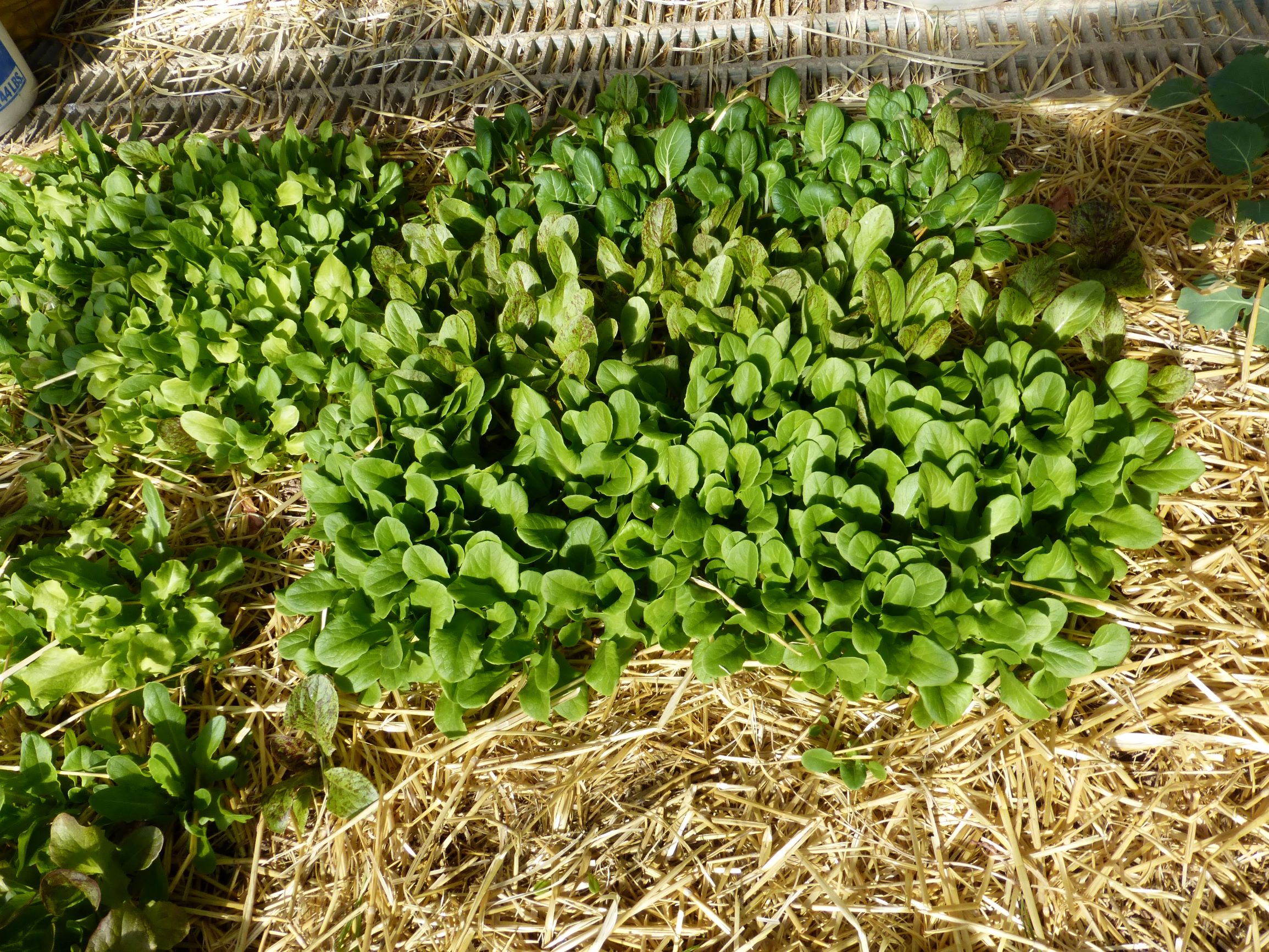
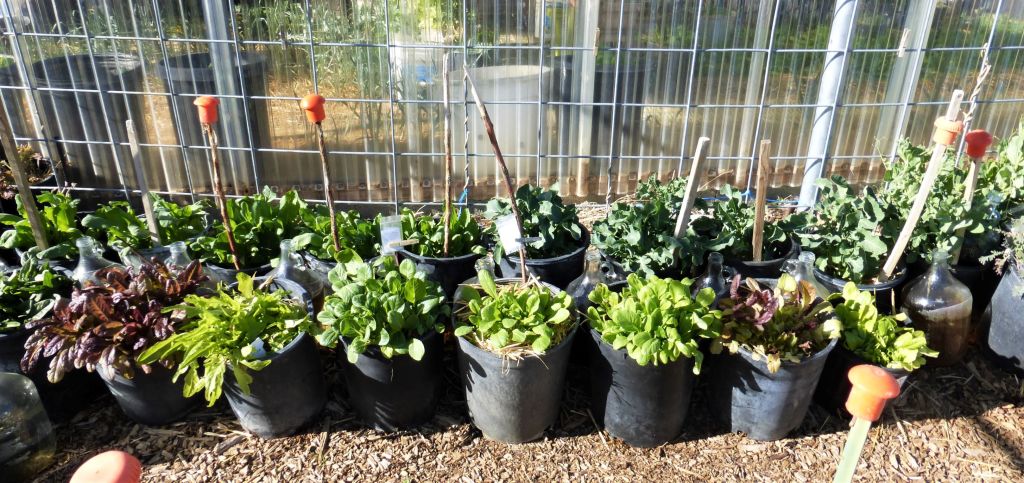
As you can see, I’ve got LOTS of lettuce and greens growing right now! I’ve got a wide variety of lettuce, spinach, rapini, Bok Choy, Swiss chard, kale, and other greens, as well as peas.
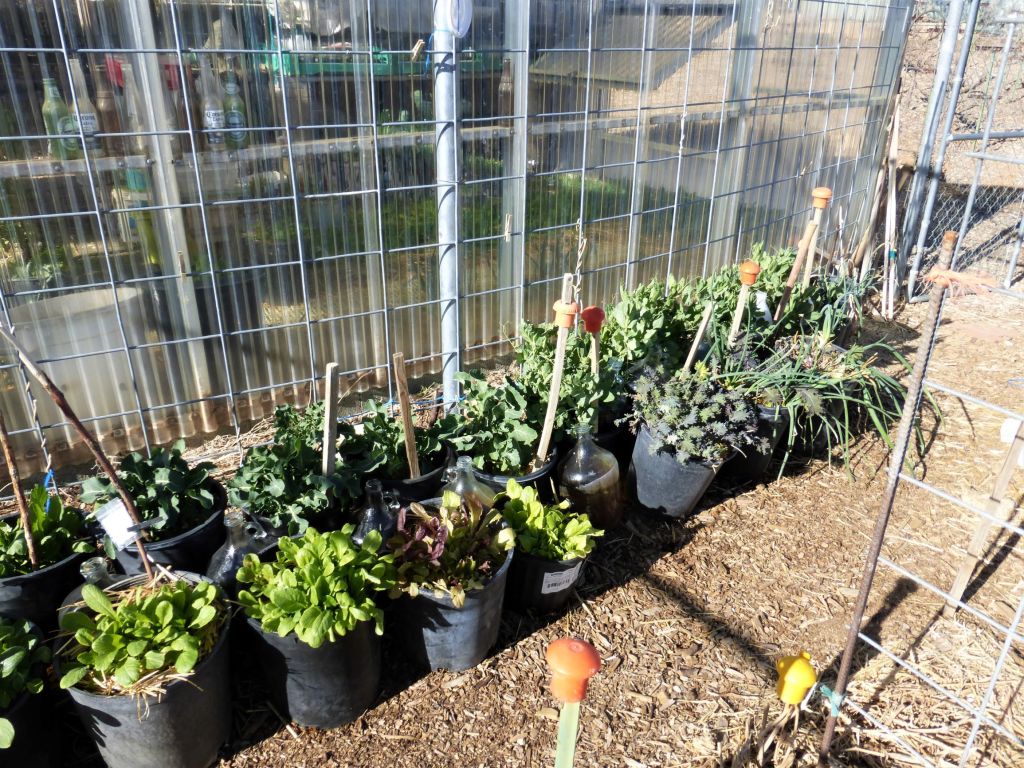
I’ve also got quite a few onions and broccoli plants that overwintered quite nicely. The broccoli and peas were direct seeded in bottomless pots sunk a few inches in the ground and filled with a rich soil and compost mix. During the winter I surrounded them with glass jugs of water to help keep them warm. The water would warm up in the sun (as did the black pots) and then the added heat would be released at night keeping the surrounding temperature above freezing. If the temps dropped too low (30 degrees or so) I’d also cover the plants with a sheet. We got temperatures down to 23 degrees and none of the plants sustained any damage.
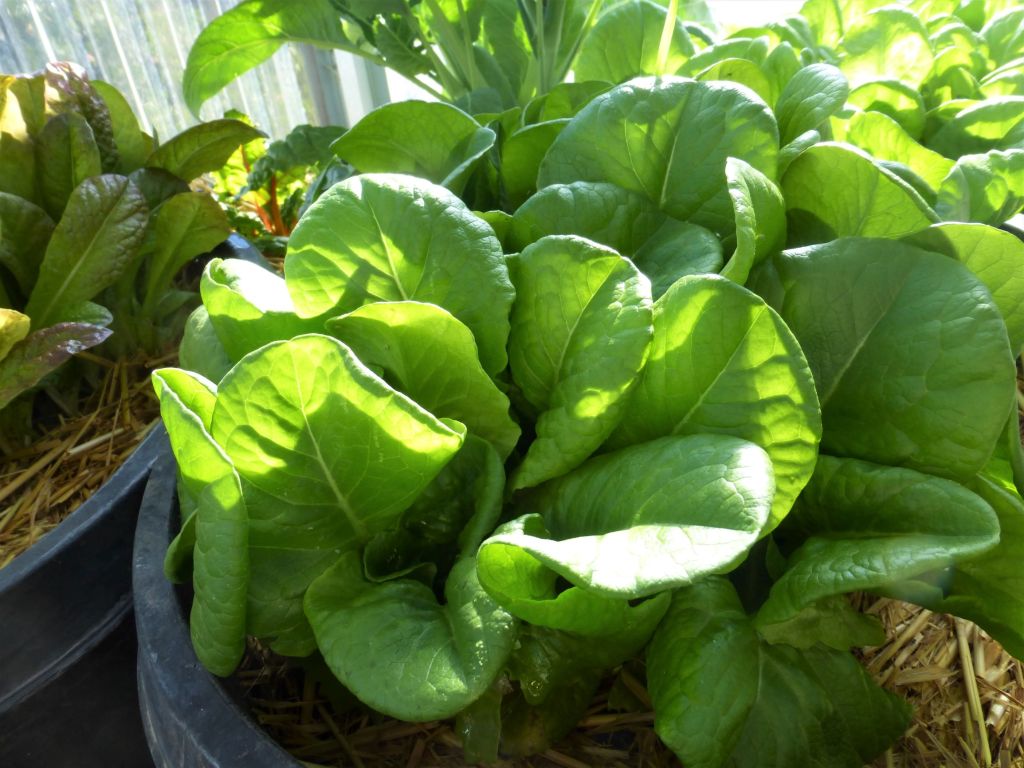
I also planted pots with lettuce and greens in the greenhouse. Above is my beautiful Buttercrunch lettuce.
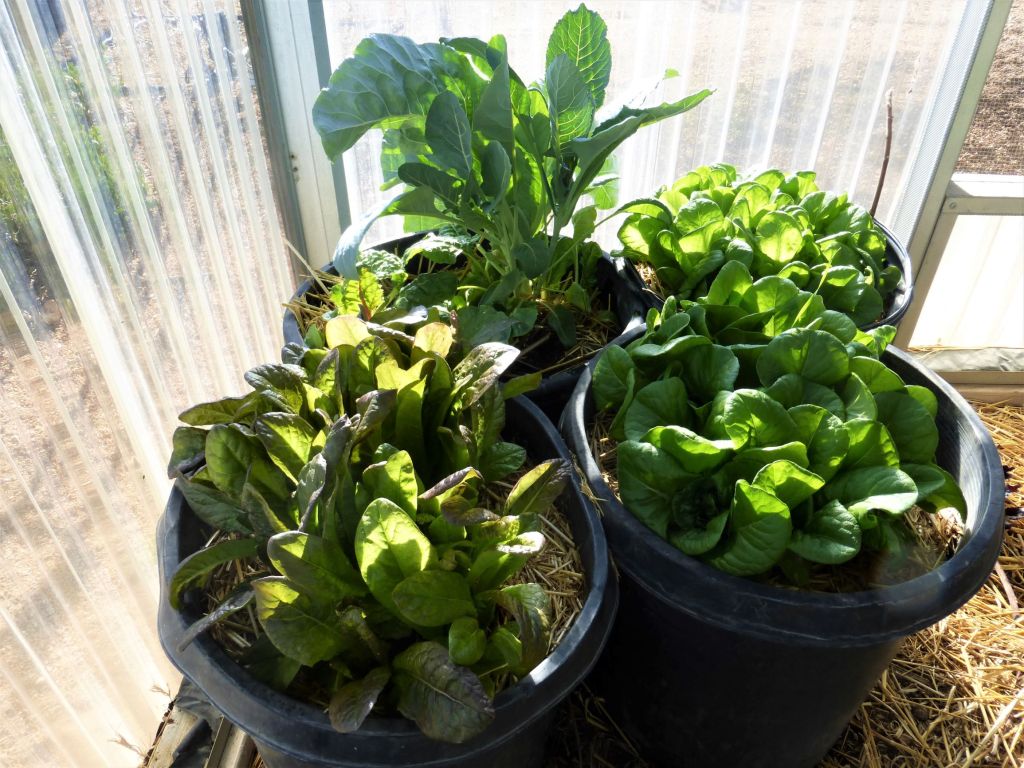
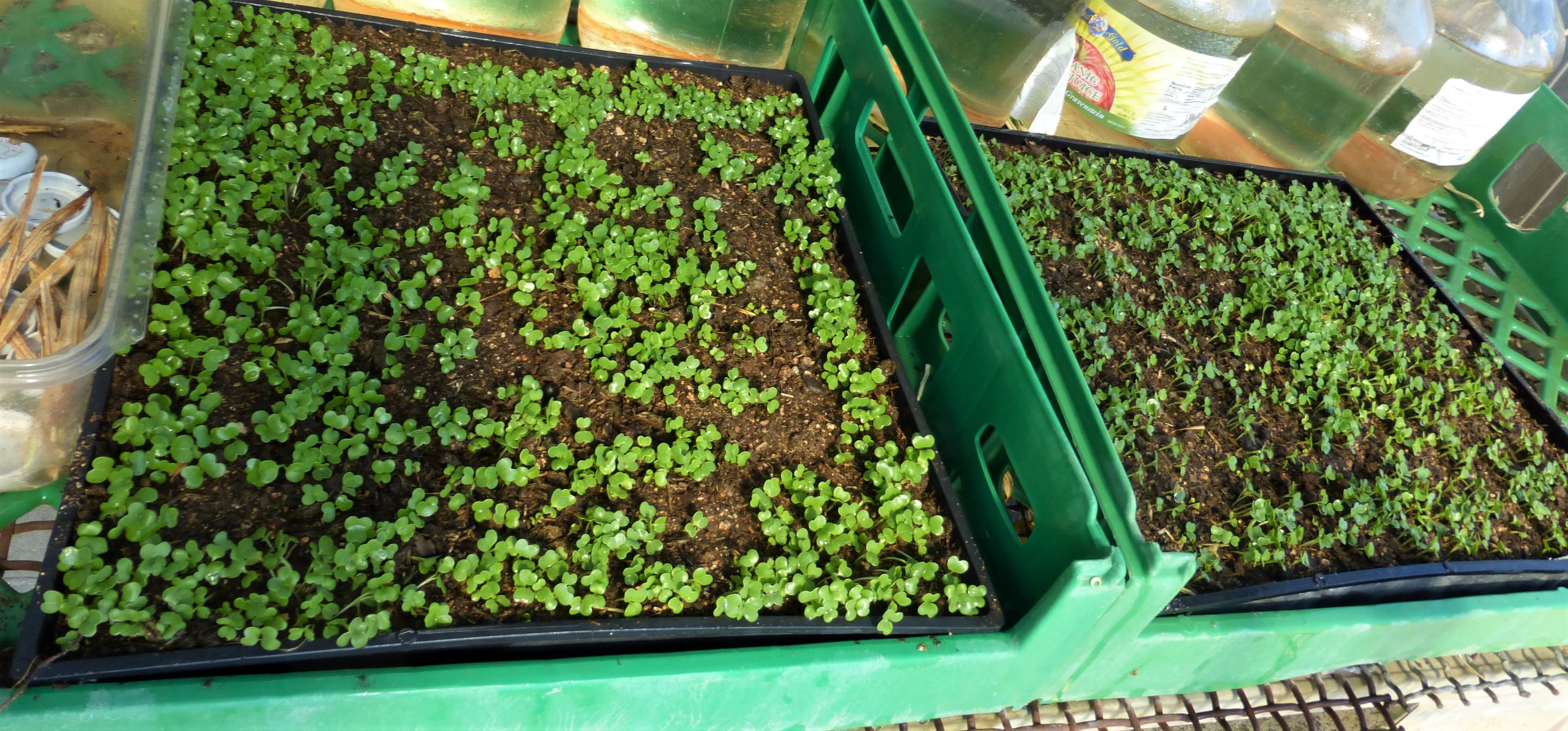
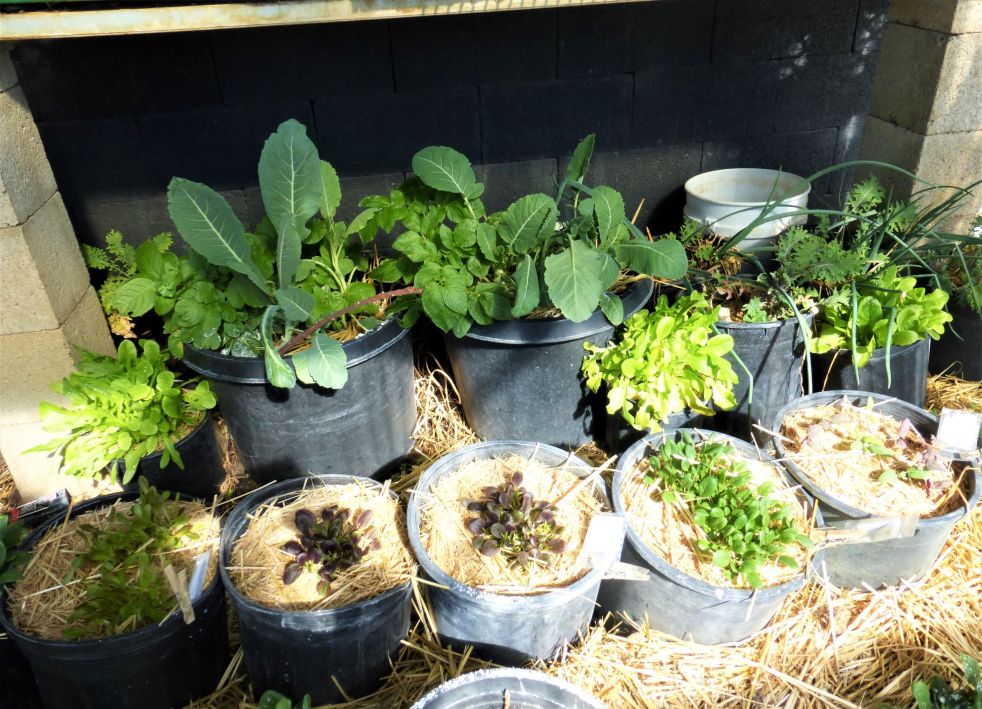
I planted some cauliflower seedlings in large pots in the greenhouse as well. Above is a potted cauliflower, some Buttercrunch and some Trout Speckled Romaine lettuce. I started the lettuce and most of the greens in shallow plastic berry containers. When the plants were about a month old and had some nice roots I was able to easily transplant them to larger pots without disturbing the roots and causing transplant shock. Sowing the seeds in potting mix in those berry containers works so well I’m doing it with all my greens now. It seems like whenever I direct sow I lose a lot (if not all) of my seedlings to insects- particularly potato bugs. Waiting until the plants are a month or two old before I plant them in the ground seems to give them a fighting chance against the bugs.
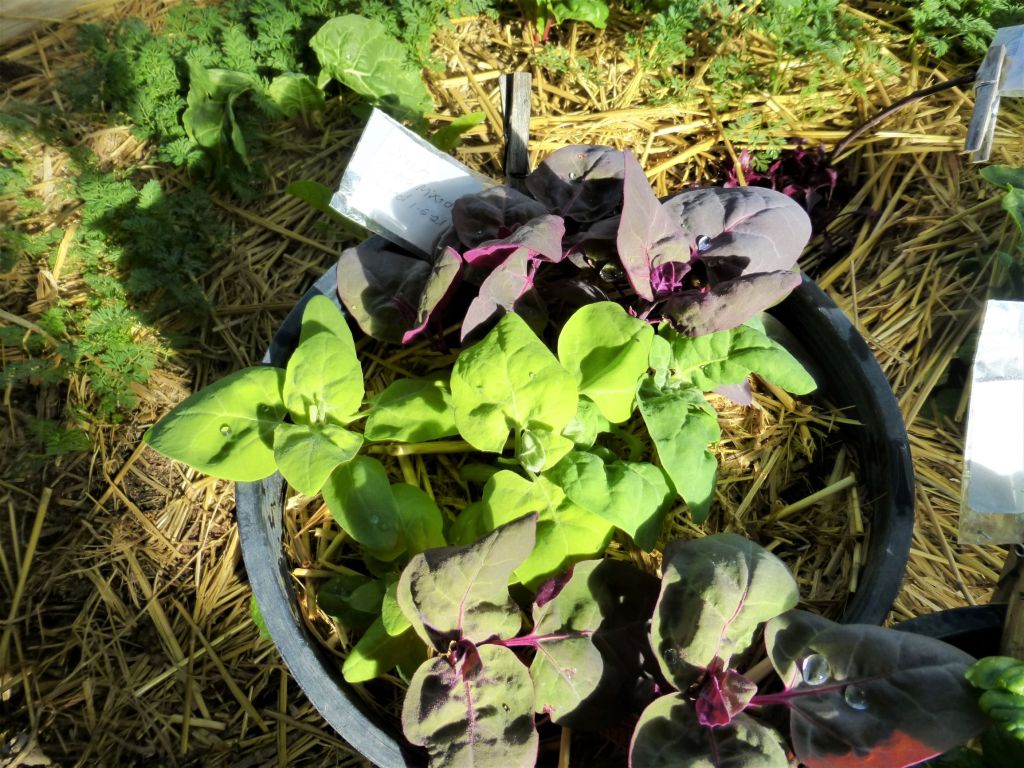
This year I bought a bunch of unique seeds from Baker Creek Heirloom seeds. They’ve got lots of different greens that I’ve never heard of before. Above is Aurora Mixed Orach, a bolt resistant spinach substitute. I love spinach, but I can only grow it in the winter- the minute it starts to get warm the plants want to bolt and start producing seeds. I was able to find several different spinach substitutes that can handle the heat, so hopefully I’ll have a much longer season for harvest.
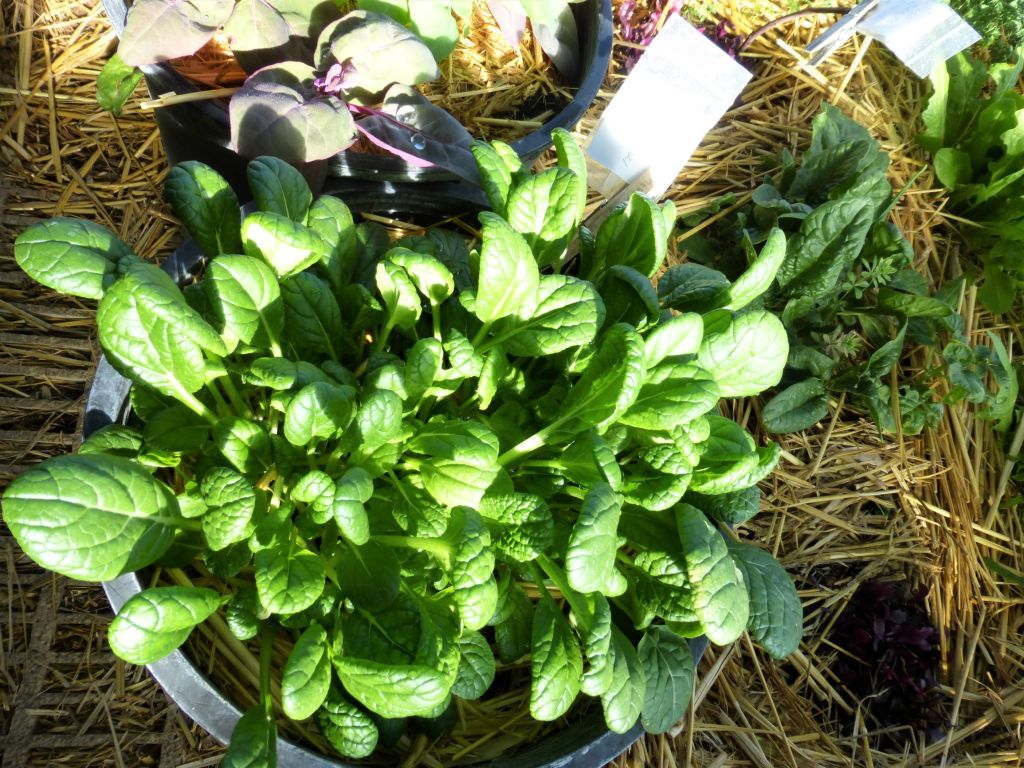
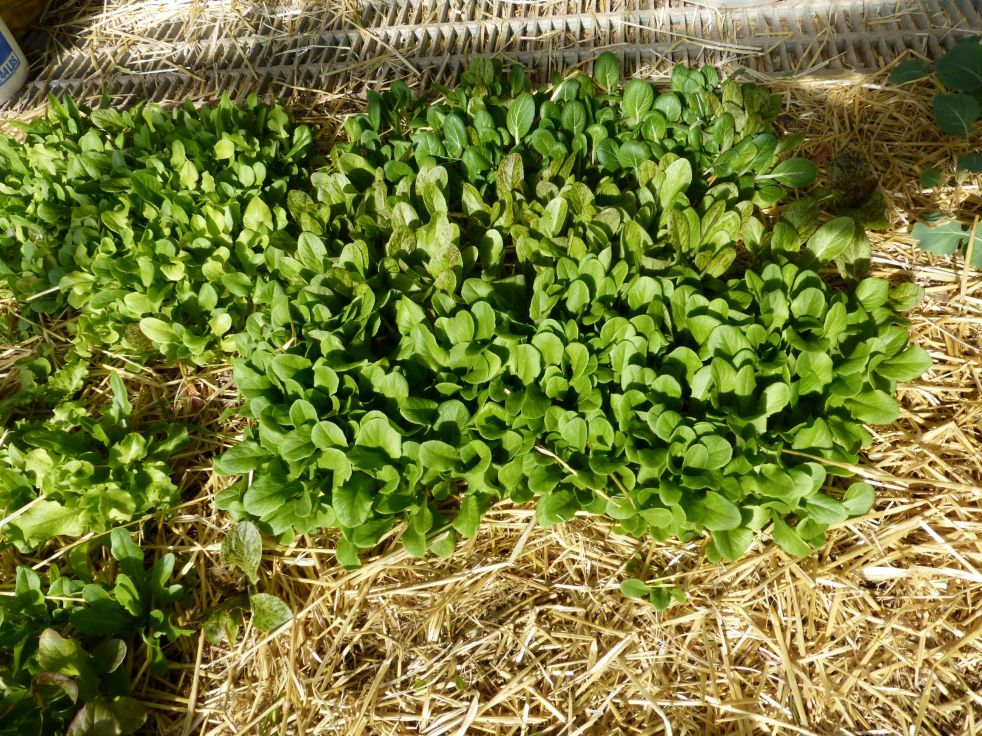
Above is another new find- Chijimisai greens, which are a cross between tatsoi and komatsuna. They have four times as much vitamin A as carrots and are heat and cold tolerant. I love greens like this- highly nutritious with a long harvest season. You can get so much out of plants like these!
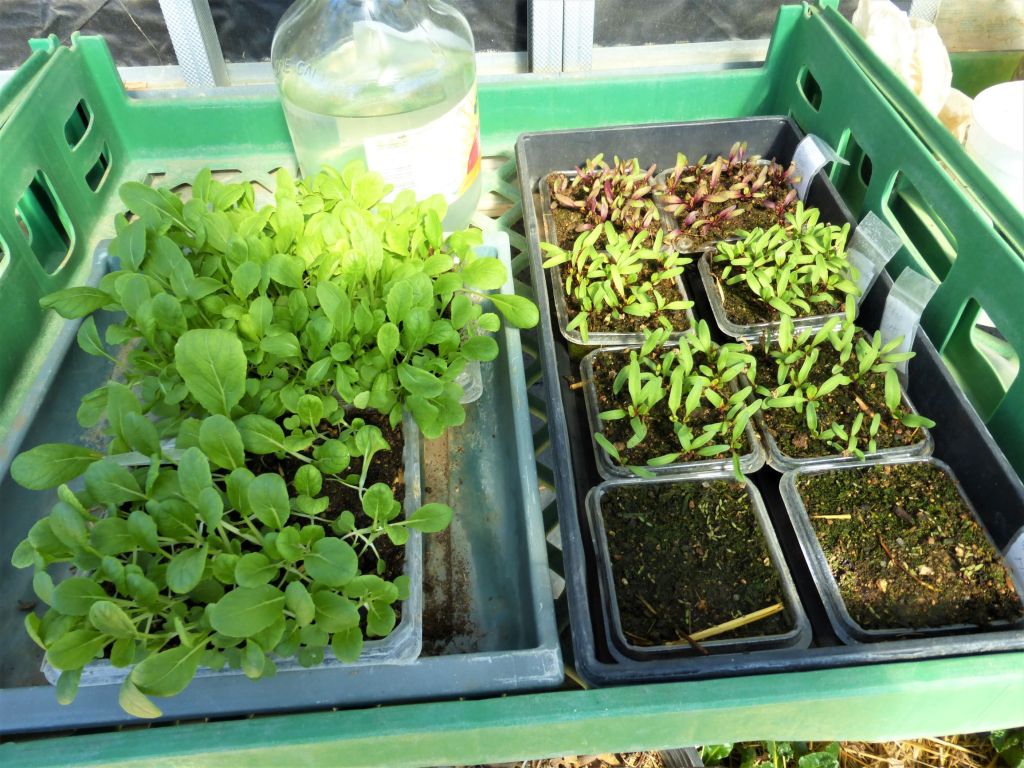
I started all my greens and lettuce, and a few plantings of beets in berry containers and then transplanted them into 3 gallon pots. I kept the pots in the greenhouse until the nighttime temperatures were above freezing, and then hardened the plants off for several days before leaving them out in the garden. Since they’re in pots I can move them into the shade when it starts to get warmer.
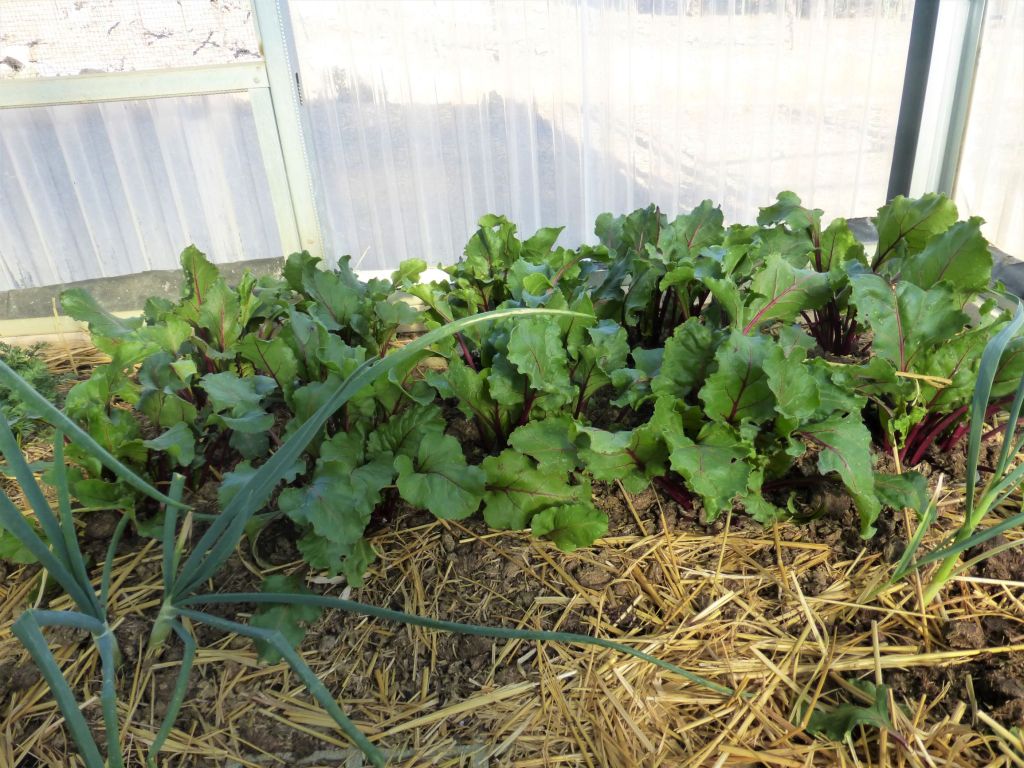
In October I started some beets (Tall Top Early Wonder) in several berry containers and transplanted them into the greenhouse when they were about a month old. I’ve been harvesting the greens for several weeks now and recently thinned them and had some nice baby beets. I replanted some of the roots from the first thinning and most of them have survived and are growing nicely. Beets are another favorite of mine. You can get so much from one plant! You can harvest the baby greens and include them in your salad- they are so sweet and tender! As the leaves get larger you can harvest them and sauté them (stems included) as you would any other green. Then of course you’ve got the beet itself- delicious roasted whole or diced and sautéed.
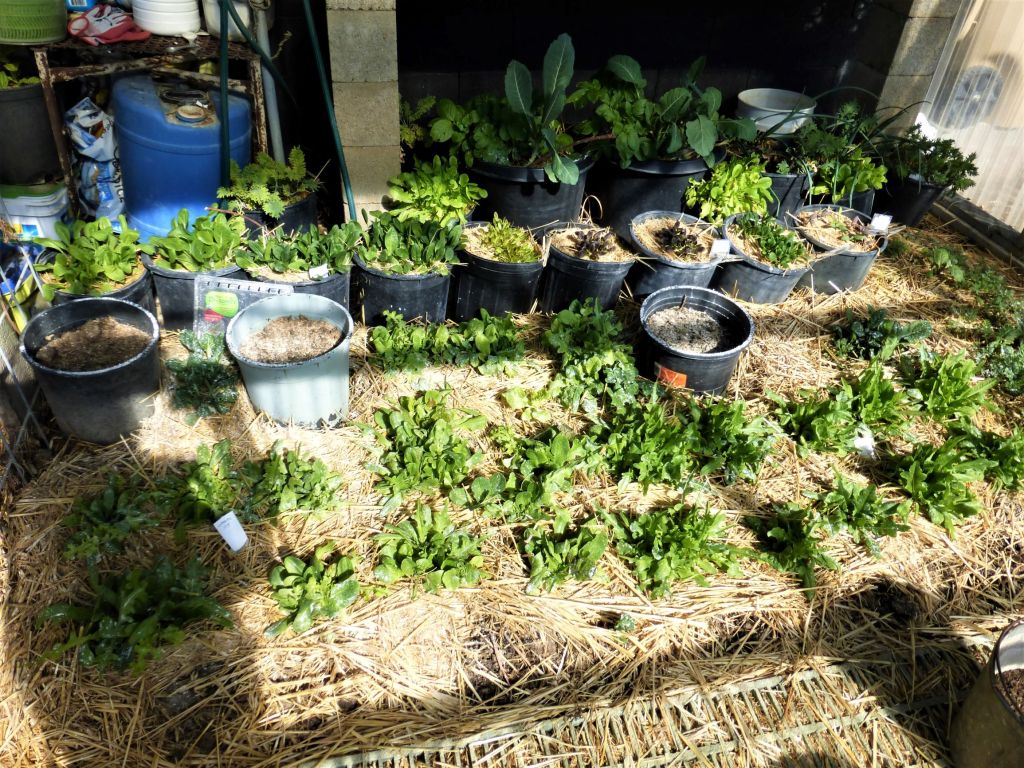
Above is the lettuce I started in berry containers in October. In November I transplanted it into the ground in the greenhouse and have been harvesting ever since. It’s starting to get warm now (70 degrees or so) and these plants will probably start to bolt soon since they’re in the greenhouse and the temps get to 85 or 90 degrees during the day. I may save a few plants for seed, but the rest will go to the chickens. Now my lettuce in the gardens is really looking nice, so I still have plenty for salads. Plus I just noticed some stray lettuce popping up in a few of the gardens 🙂

I feel so lucky to have been able to continue planting and growing greens and veggies all winter. There’s nothing as grounding and calming for me as being among my plants 🙂 I just love growing things and tending them throughout the growing season. And there’s nothing as delicious or nutritious as food you grow yourself!

Thanks for stopping by!

~Michelle

Shop CreativeCritters on ArtFire
Shop CreativeCrittersClay on Etsy

Find Michelle of CreativeCritters on Facebook

Garden Journal

Garden Review July

The big garden looks great!

To say it’s been a busy month would be putting it lightly. The garden is doing better than ever before and I’ve been harvesting, cooking, and preserving as fast as I can 😉 I’ve harvested more in one month than I did for the entire season last year! July is normally the start of monsoon season, but although we’ve had the heat (up to 110 degrees!!) there hasn’t been much rain at all.

In spite of the heat and lack of rain the plants have done really well. I attribute this to the thick layer of straw mulch. I generally water twice a week for the in ground plants and daily for the potted plants.

Homestead tomatoes, bell peppers, and potted basil

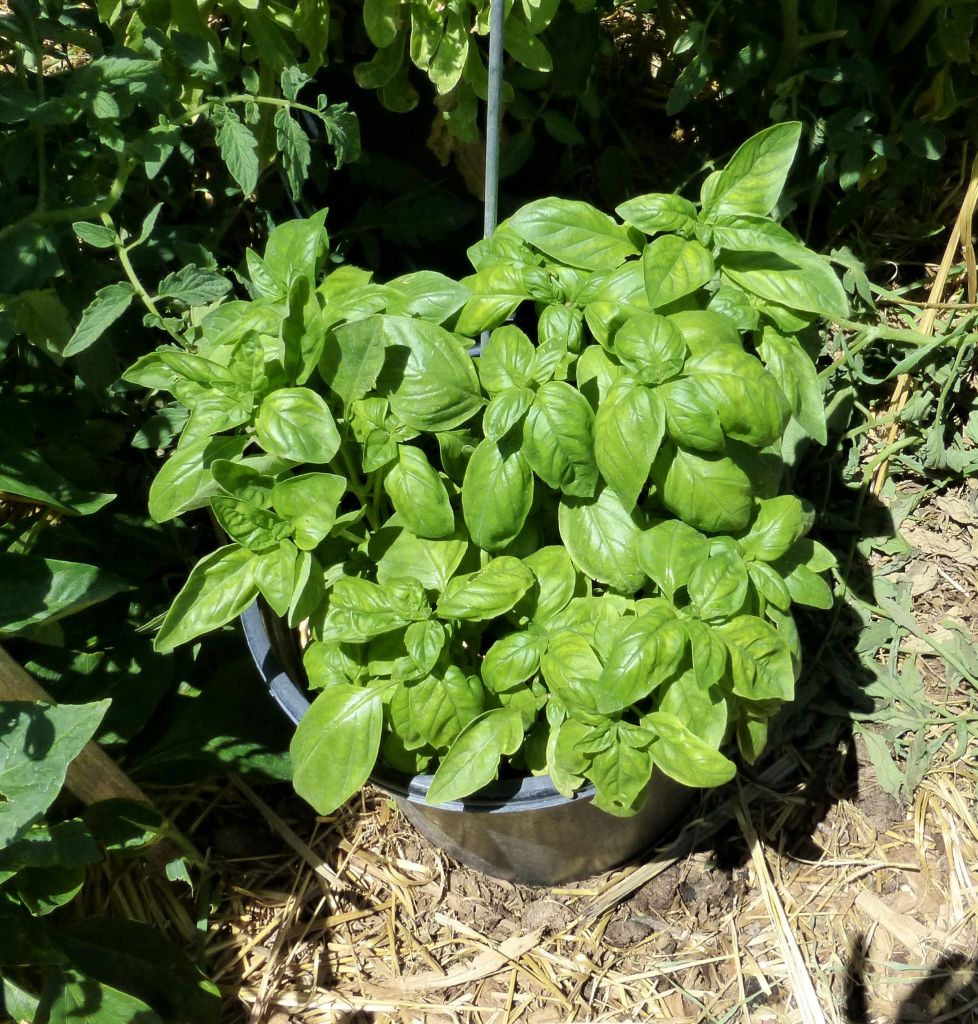
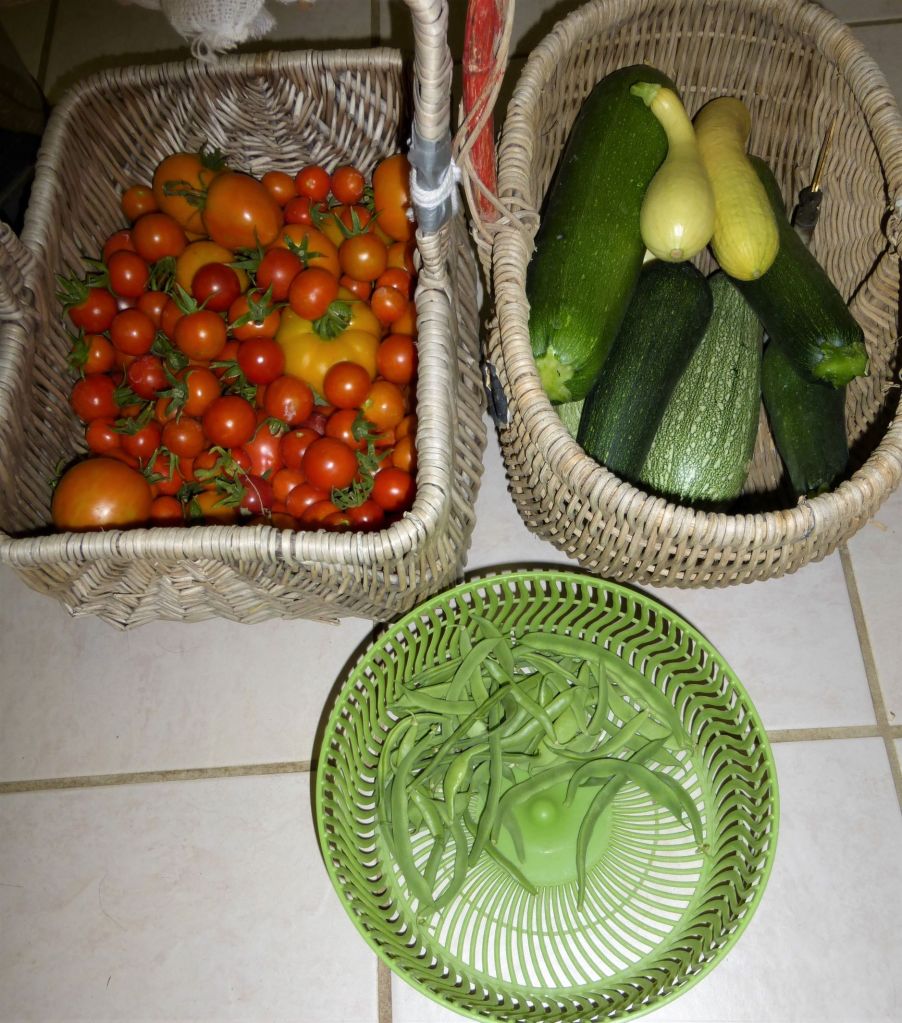
I started harvesting cherry tomatoes at the beginning of the month, earlier than ever before. By the end of the month I was harvesting cherry, pink, yellow, Roma, Amish paste, and my first Homestead tomatoes (and getting BIG harvests just about daily!) The potted basil (planted early in July) sprouted and grew quickly. I’ve been harvesting that to use fresh and even managed to make a few jars of pesto already.

Look at that beautiful basil!

I’ve been harvesting zucchini (Black Beauty and Grey Zucchini) just about daily. I’ve made several pans of stuffed zucchini, Zucchini chocolate cake, roast zucchini, and more. I’ve had enough to blanch and freeze, as well as shred and freeze, so I’ll have zucchini ready for recipes in the middle of winter. Same goes for the yellow squash.

So thankful for the bounty of the garden!

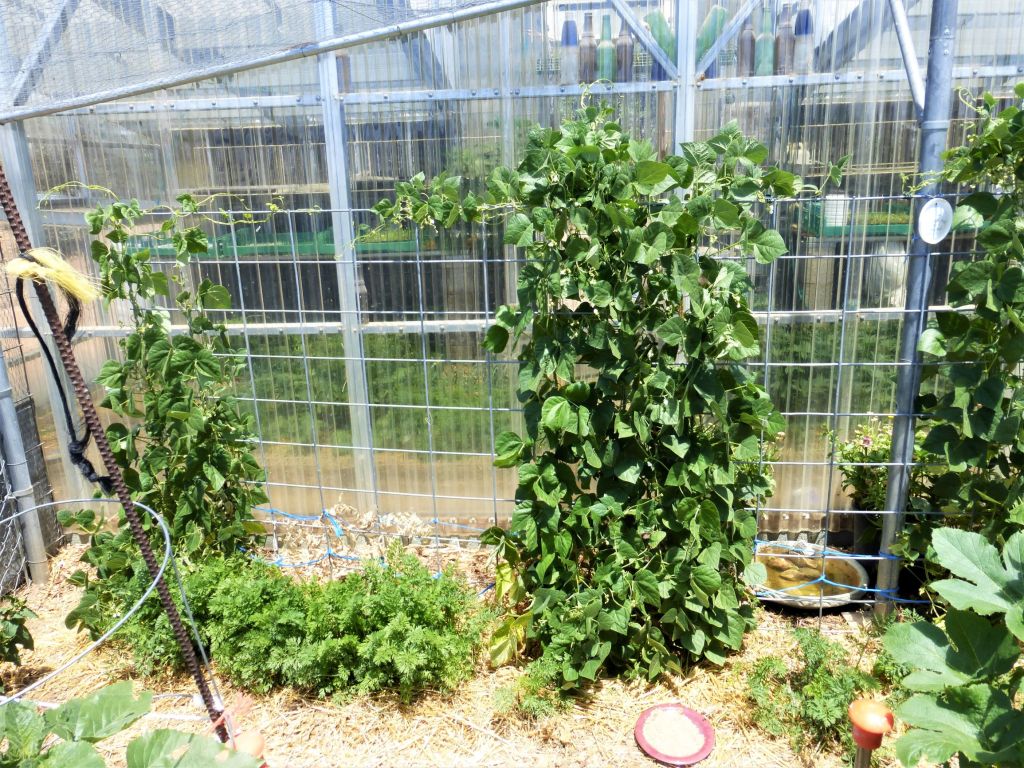
The green beans got off to a good start and I managed to get some good harvests during the early part of the month. I blanched and froze about 3 quarts and have made several meals with fresh beans. I like to saute some garlic in olive oil, add in the beans and cook just until tender- simple and delicious!

Beans and carrots (with a dish of NOLO bait for the grasshoppers)

The beans got off to a good start, but they’re starting to dry up now. Between the intense heat and the grasshoppers it’s not surprising that the first planting is starting to struggle. I do have beans planted in a few other spots that I started later, so hopefully they’ll start producing soon. I try to make successive plantings with all the veggies that will grow quickly, like beans, summer squash, basil, and greens.

Second planting of zucchini and cucumbers on the end

My second planting of zucchini took off quick and is starting to produce. In the picture above the cucumber plants (on the right) look really good. I managed to get about 4 cukes off the plants before they just up and died:( I’ve had a really hard time with cucumbers (but I keep trying!).

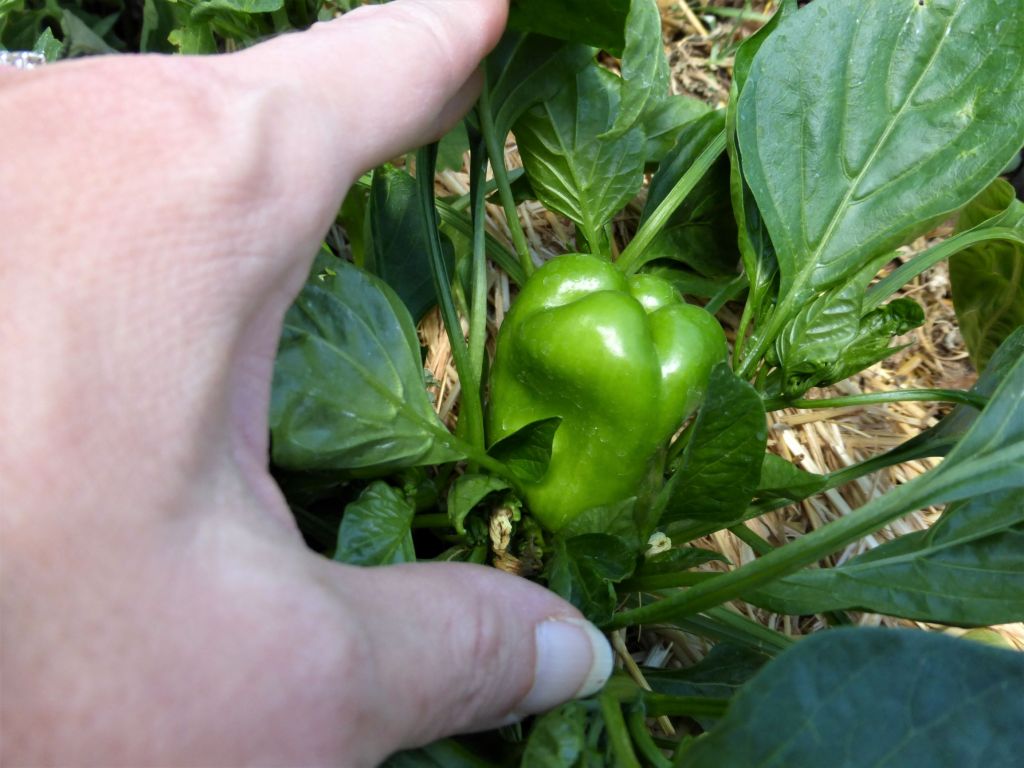
Bell peppers are coming along nicely

After a rough start this spring the peppers have started to really take off and I’ve got quite a few green peppers on the plants. I’ve never harvested red, orange, or yellow peppers before mid to late August, so I’m just trying to be patient and waiting for them to get ripe.

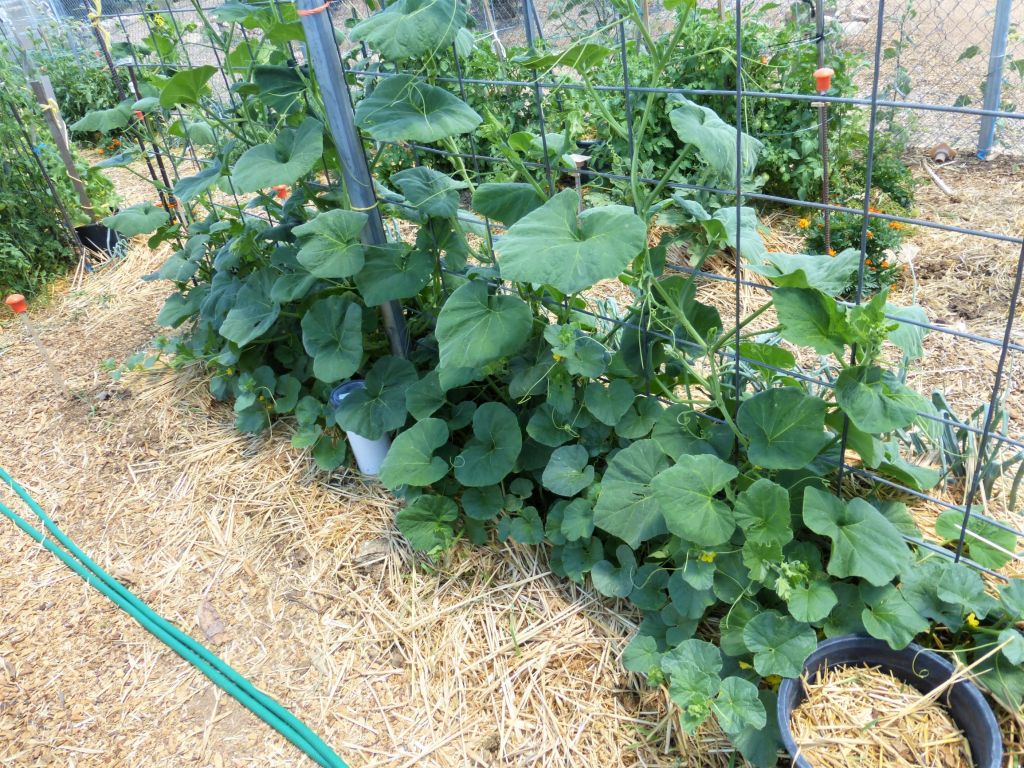
Cantaloupe are full of flowers!

The cantaloupe took a while to come up, and I’d almost given up on them, but they’ve really taken off lately. They’re loaded with flowers and I’m really hoping for a good harvest. Fresh cantaloupe is absolutely delicious!

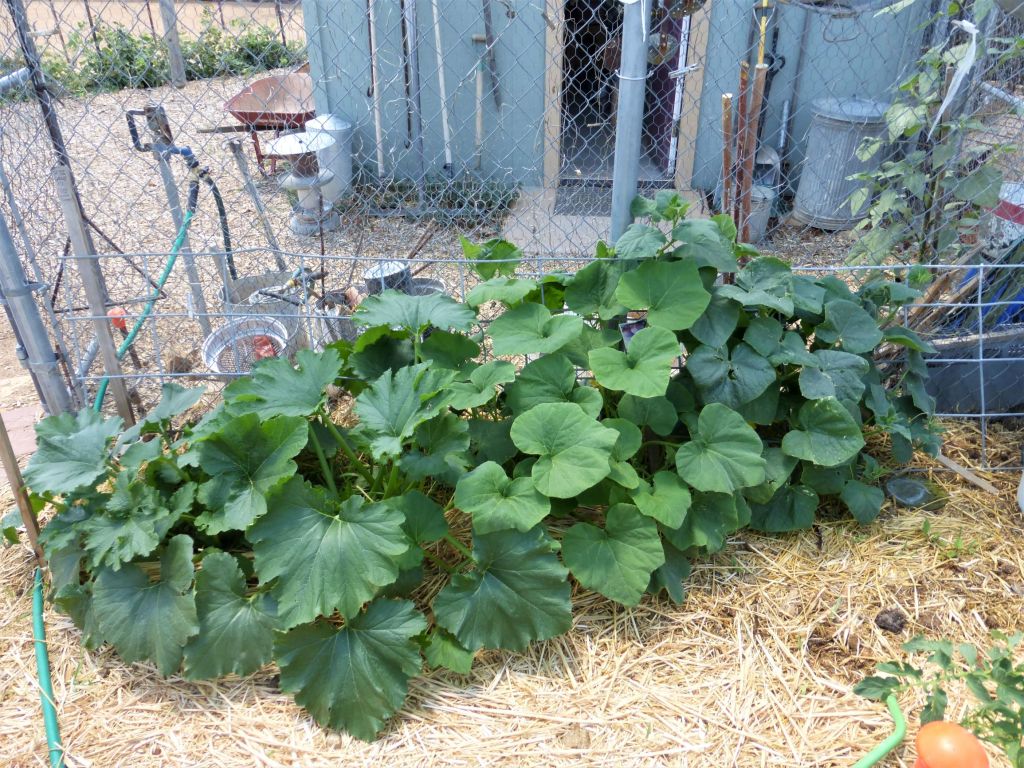
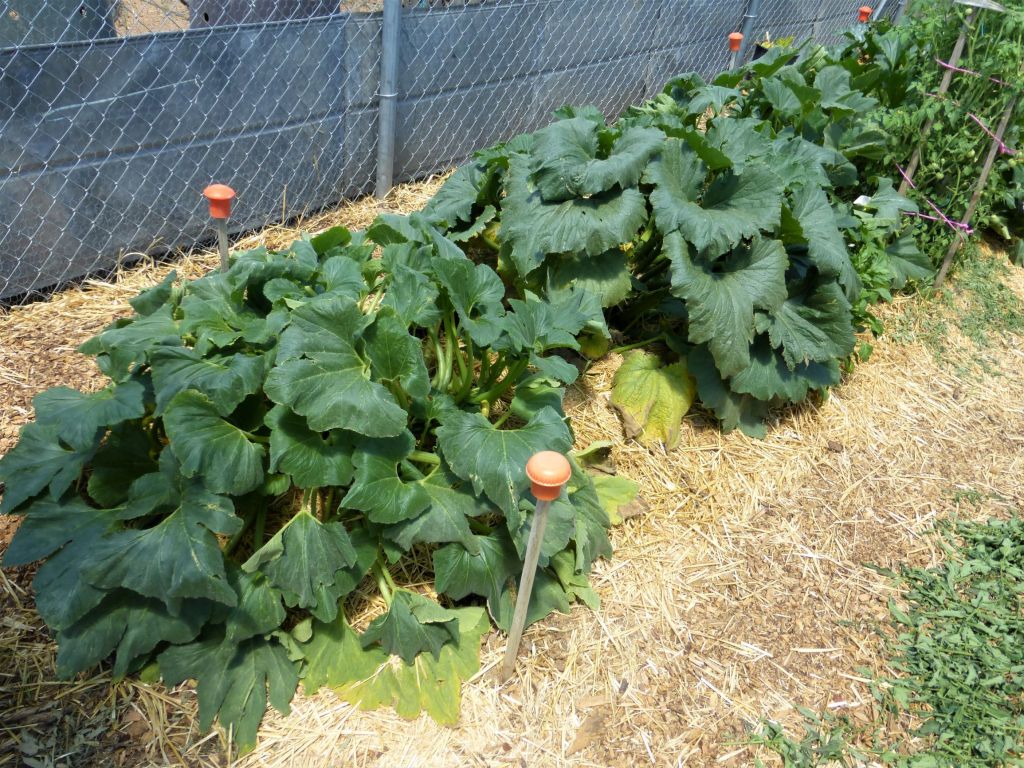
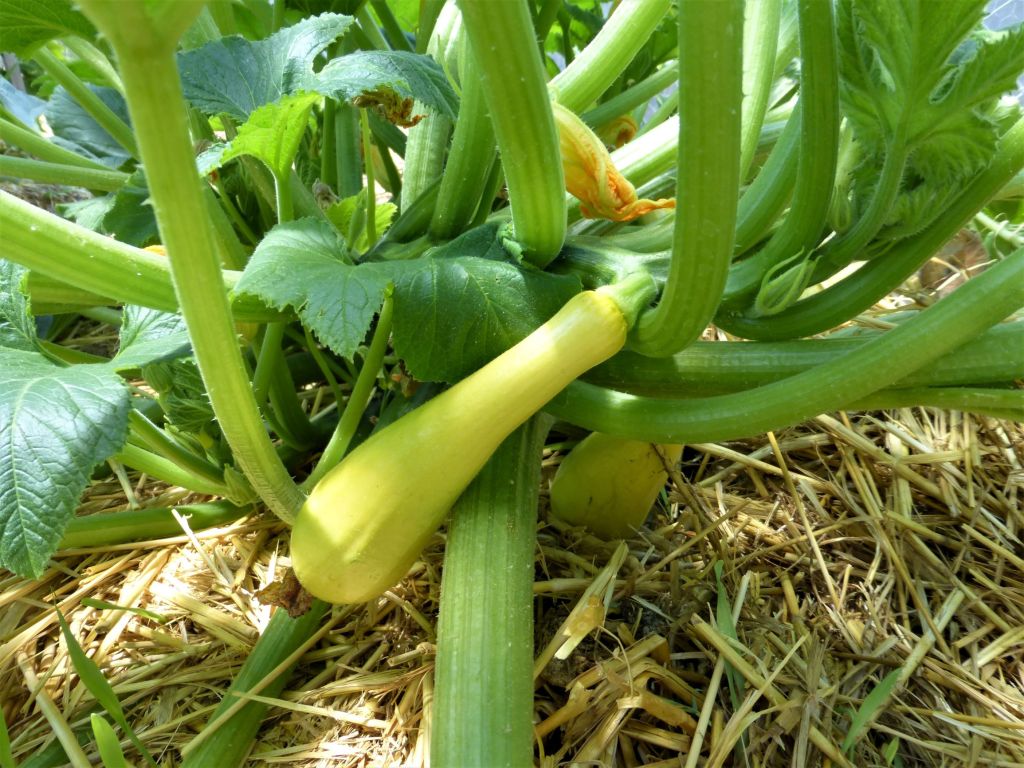
Zucchini and yellow squash plants have gotten huge!

The first planting of zucchini and yellow squash have been producing like mad and I’ve only lost one plant so far. Amazingly I’ve had minimal squash bugs- a first for this garden. In years past those bugs have absolutely decimated my squash plants.

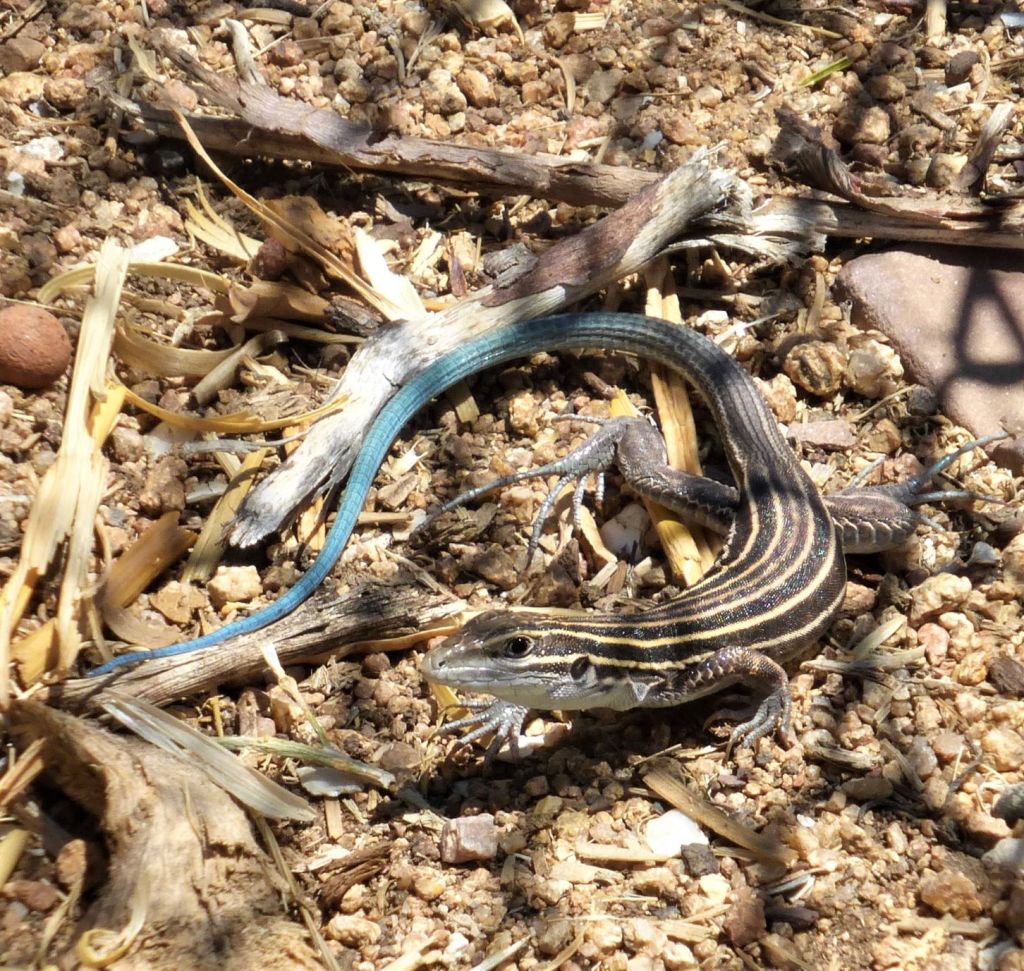
Desert Grassland Whiptail

This year I’ve got LOTS of lizards and beneficial insects in the garden though, and I really think they’re working overtime to keep the bad bugs at bay. I’ve only used Neem a few times when I spotted squash bug nymphs emerging, and then only as a spot treatment. Neem is organic and way safer than chemical pesticides, but it will still kill the good bugs along with the target insects, so I’m trying to play it safe and keep a healthy balance.

pretty little yellow squash 🙂

For the grasshoppers, which can utterly devastate the garden in no time, I put out NOLO bait, which is a targeted biological insecticide. It only affects grasshoppers and crickets, so it’s safe for the other animals and insects in the garden. I also hand pick and feed the grasshoppers to the chickens every chance I get.

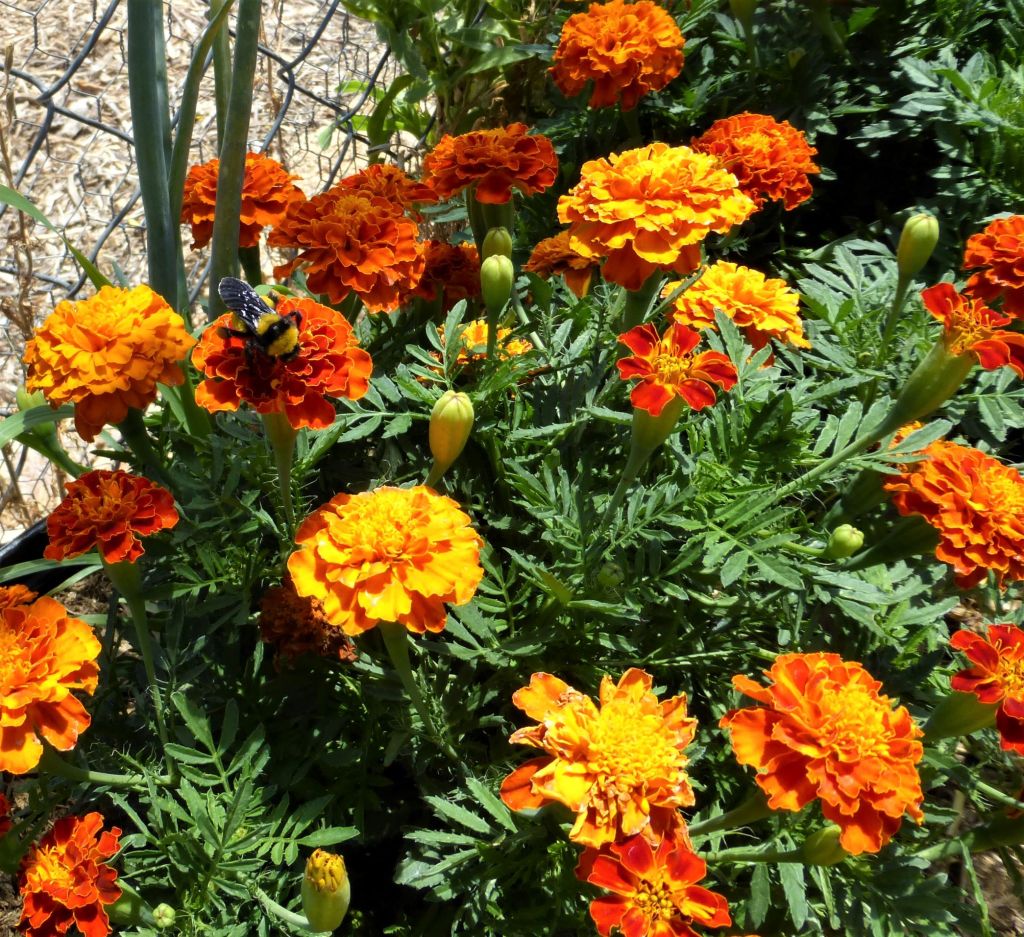
Marigolds for the bees and beneficial insects

One way I attract a host of beneficial insects into the garden is to have a variety of flowers throughout the vegetables. I have marigolds, sunflowers, nasturtiums, calendula, zinnias, and four o’ clocks, along with a few carrots and parsley plants that are flowering. I’ve never seen so many bees, wasps, parasitic flies, praying mantis, ladybugs, dragonflies, and more!

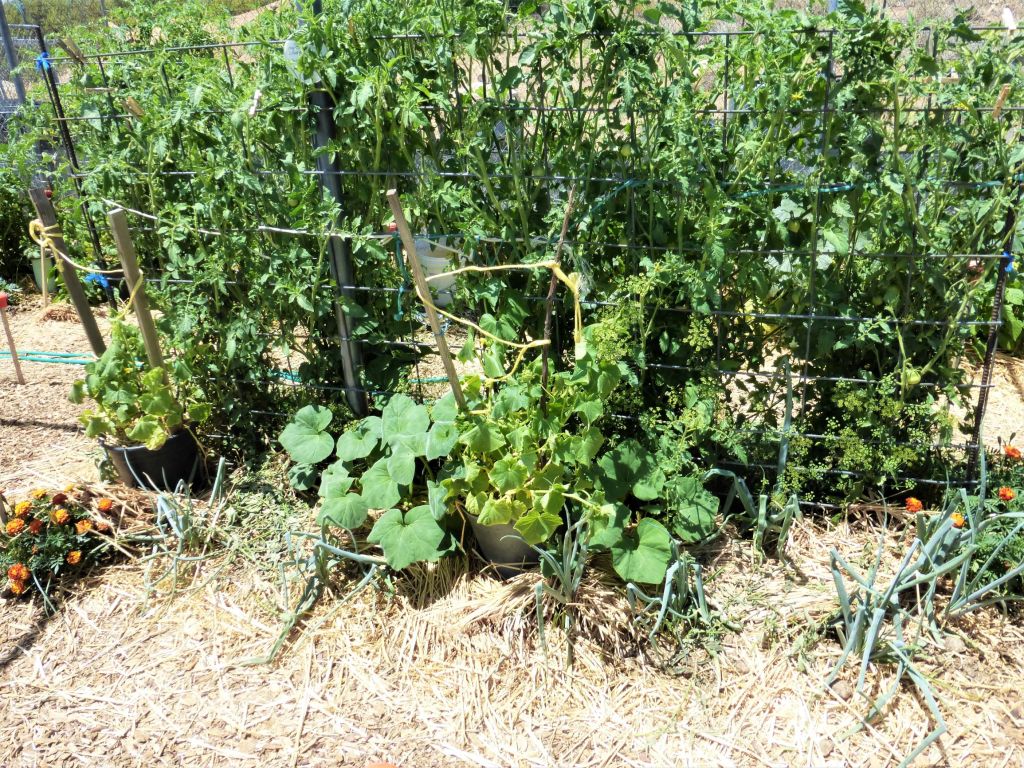
potted cucumbers and butternut squash

The cucumbers I planted in pots are doing pretty good and I’ve even got a few small cukes on the vines. At this point I’d be happy with anything I can get from them!

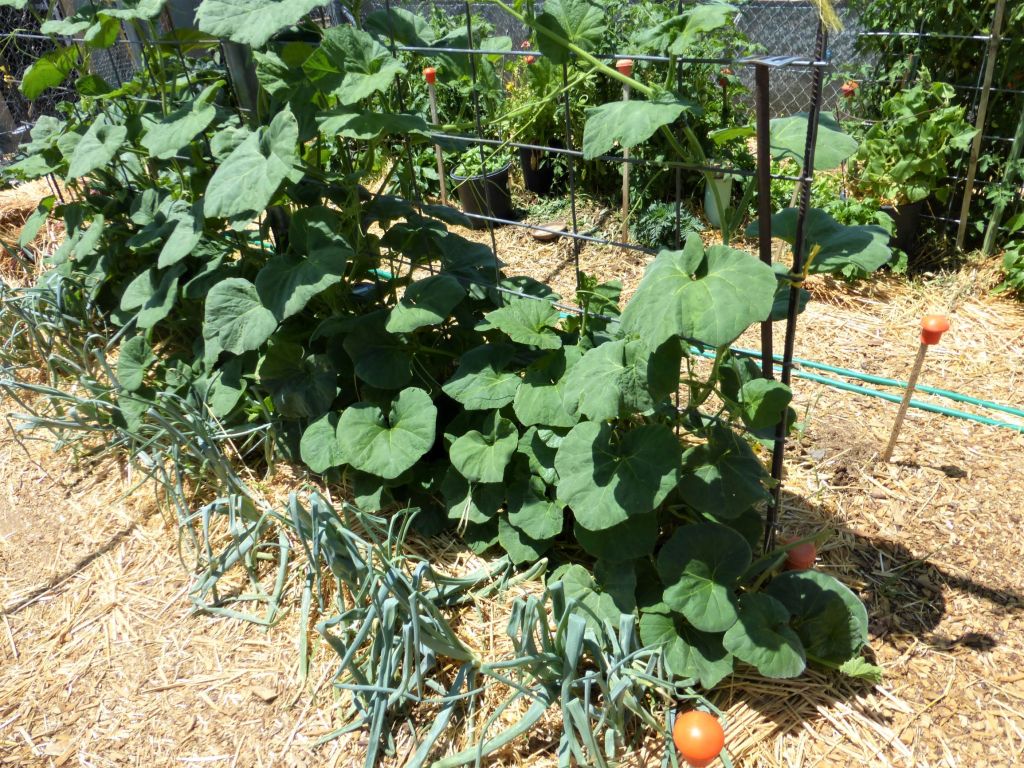
butternut squash and onions

The butternut squash are all doing good and have lots of squash on the vines. If they all reach maturity I’m going to have a lot of butternut squash this fall! I accidentally overplanted this spring, thinking the first batch of seeds wasn’t going to sprout. Turns out they all sprouted- they just took longer than usual. In the meantime I had started more seeds though, and they all came up as well. Then those mystery plants in the compost turned out to be butternut squash too. Good thing we like butternut squash!

So that’s what’s growing in the garden right now. Hopefully everything continues to do well as summer progresses.

Thanks for stopping by!

~Michelle

Shop CreativeCritters on ArtFire
Shop CreativeCrittersClay on Etsy

Find Michelle of CreativeCritters on Facebook

Garden Journal

The Greenhouse in Winter

I am so thankful for the greenhouse, especially during winter when outdoor gardening is a bit limited. I started preparing the greenhouse in September by adding a thick, 3″ layer of sifted compost on top of all the planting areas. I’ve started incorporating no till methods, and this is the first year the greenhouse hasn’t been tilled at all. The compost I added was full of worms and just gorgeous. I just can’t get enough compost! LOL

About a week after I laid down the compost, which I kept nice and moist, I planted my first planting of lettuce, rapini, Swiss chard, spinach and broccoli. Once the first seeds were growing into nice looking plants (a few weeks after planting) I sowed another batch of lettuce and Swiss chard and some purple kale. I mulched everything thickly with straw. I also brought in 5 gallon buckets of water and filled chicken feed bags with compost to help hold more heat during the night. Plus I filled glass jugs with water and set them up against the back wall and around the greenhouse. I made sure to surround the most delicate plants (the potted Moringa trees and the potatoes especially) with compost bags and water buckets.

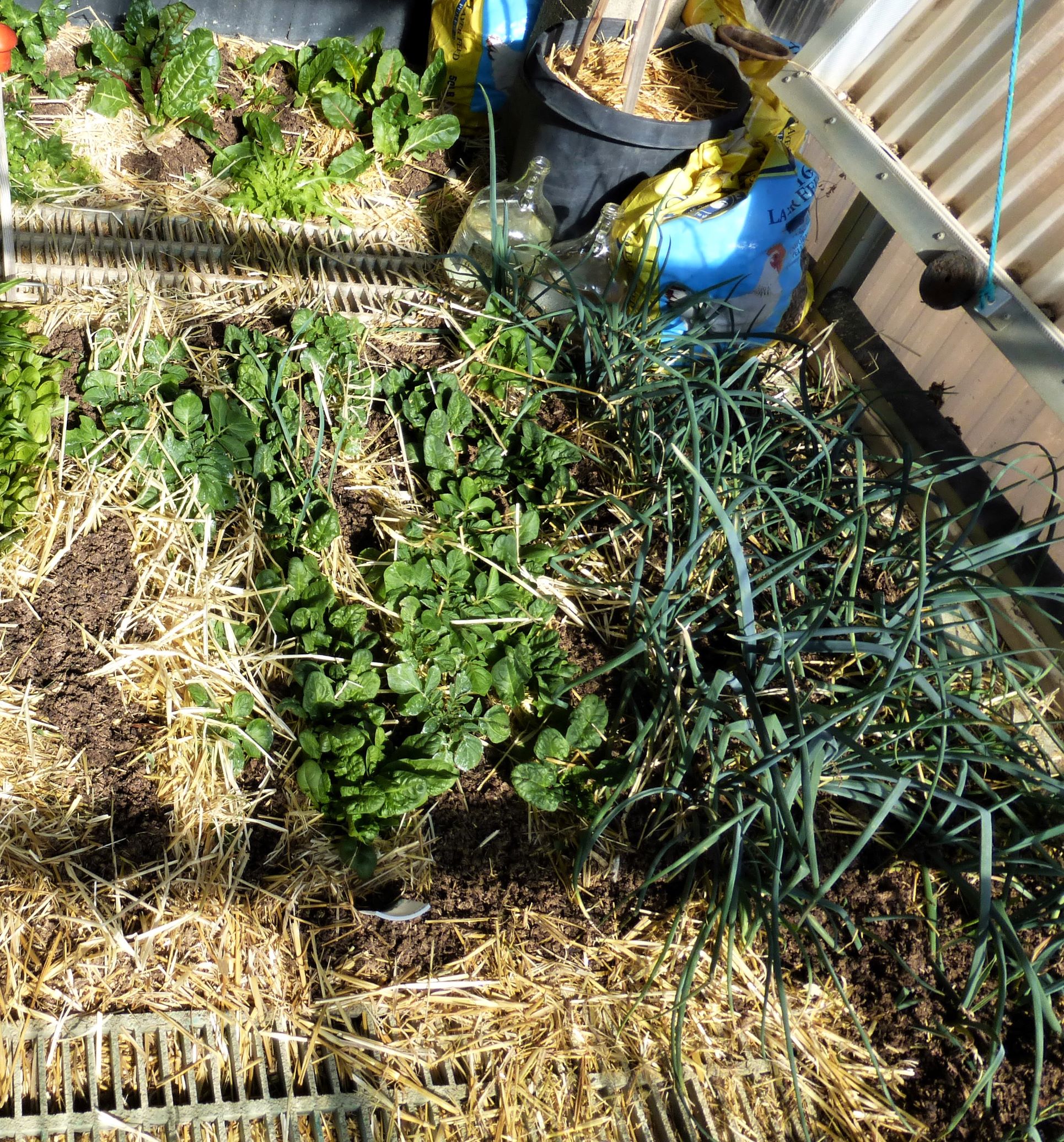
Here I’ve got spinach and onions. In the back is some Swiss chard. And in the back right corner is a potted Moringa tree.
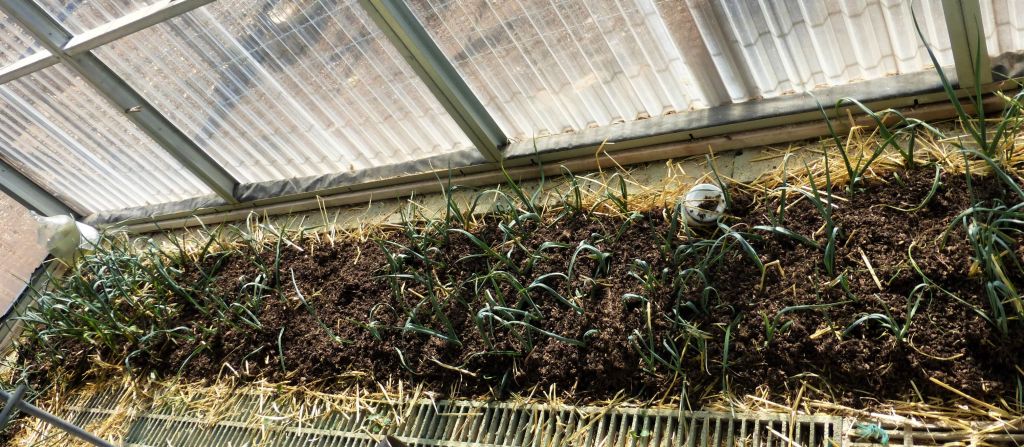
The garlic is looking good!

The same weekend I planted the first seeds I also planted the garlic. I use garlic in just about everything, so I make sure I’ve got a good supply on hand. I also had some stray onions that hadn’t gotten too big, so I replanted them on one side of the greenhouse. When I dug up the potatoes in the fall I replanted those that were too small to eat, along with some nice roots. I hope to have an early potato harvest in the Spring. I made sure to provide steady moisture and keep everything well mulched. When temps dropped below 30 degrees I covered everything with floating row covers just to be sure nothing got damaged. There have been a few nights as low as 17 degrees, but the only things that seemed to show damage were the potatoes that had already started growing.

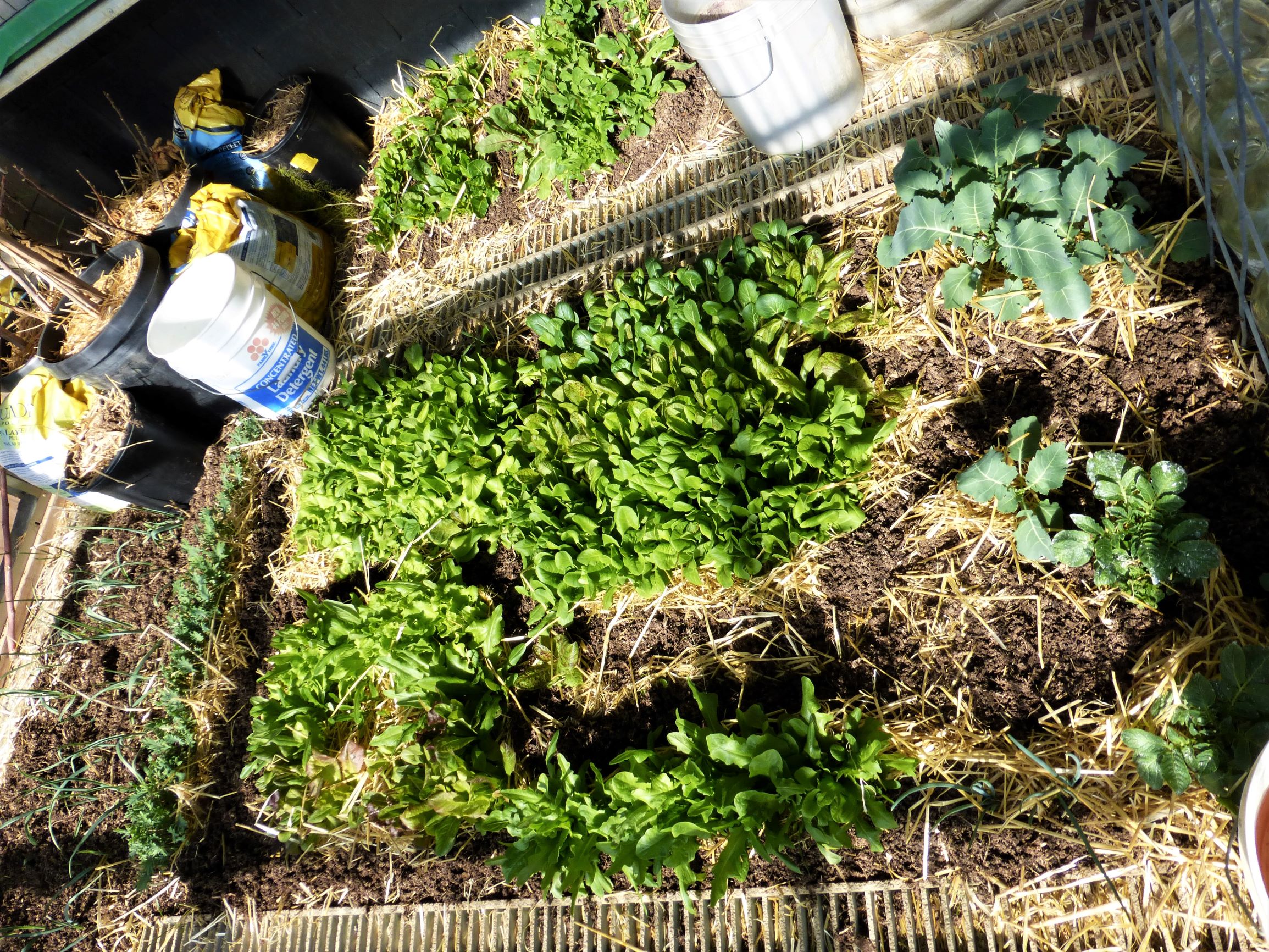
Here I’ve got garlic on the far left, a row of purple kale, mixed lettuce in the center, and broccoli on the right. In the back left corner you can see the potted Moringa trees surrounded by bagged compost and water buckets.
My favorite- Buttercrunch lettuce!
2 of 3 trays of microgreens.

So all this has kept me busy during the winter, and now, nearing the end of February, I’m starting to plan for Spring and Summer veggies. What a gift to be able to grow what I eat!

During the winter, in an unheated (aside from the water filled buckets, and bagged compost) greenhouse, I’m able to grow most any type of lettuce, spinach, garlic, onions, kale. broccoli, Swiss chard, beets, a wide variety of greens, arugala, and even potatoes if I give them extra protection when it gets around freezing. And then in late winter and early Spring I can get a jump on planting and get my seeds started in pots. I’ll continue to experiment and see what I can grow at different times of the year to make the most use out of the greenhouse.

Thanks for stopping by!

~Michelle

Shop CreativeCritters on ArtFire
Shop CreativeCrittersClay on Etsy

Find Michelle of CreativeCritters on Facebook