Garden Journal

Garden Review July

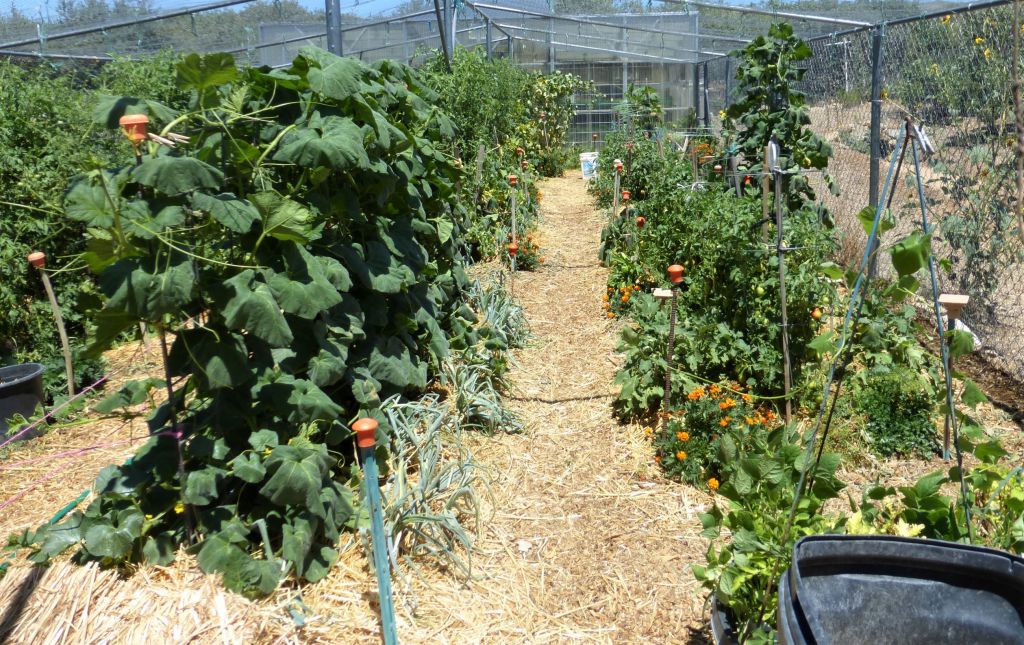
The big garden looks great!

To say it’s been a busy month would be putting it lightly. The garden is doing better than ever before and I’ve been harvesting, cooking, and preserving as fast as I can 😉 I’ve harvested more in one month than I did for the entire season last year! July is normally the start of monsoon season, but although we’ve had the heat (up to 110 degrees!!) there hasn’t been much rain at all.

In spite of the heat and lack of rain the plants have done really well. I attribute this to the thick layer of straw mulch. I generally water twice a week for the in ground plants and daily for the potted plants.
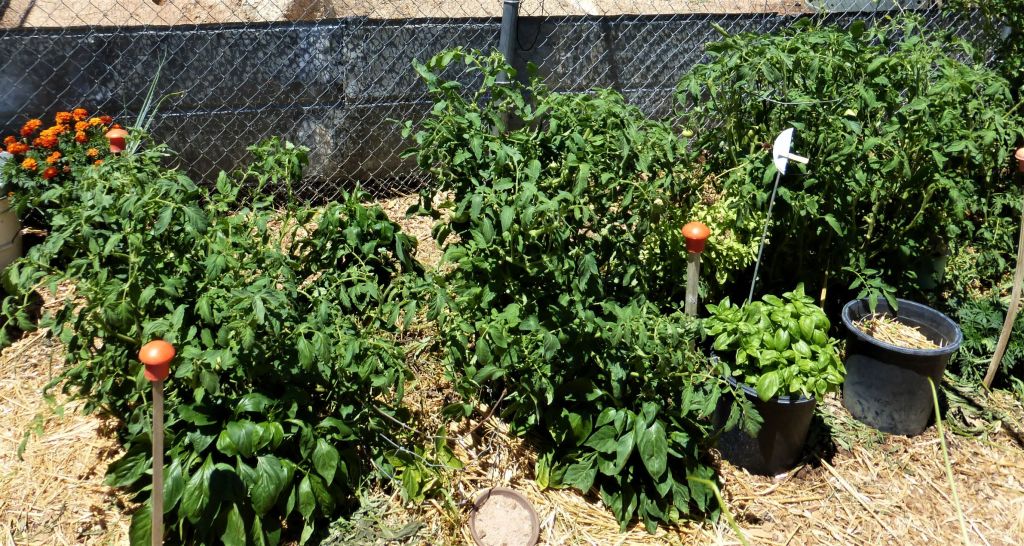
Homestead tomatoes, bell peppers, and potted basil

I started harvesting cherry tomatoes at the beginning of the month, earlier than ever before. By the end of the month I was harvesting cherry, pink, yellow, Roma, Amish paste, and my first Homestead tomatoes (and getting BIG harvests just about daily!) The potted basil (planted early in July) sprouted and grew quickly. I’ve been harvesting that to use fresh and even managed to make a few jars of pesto already.
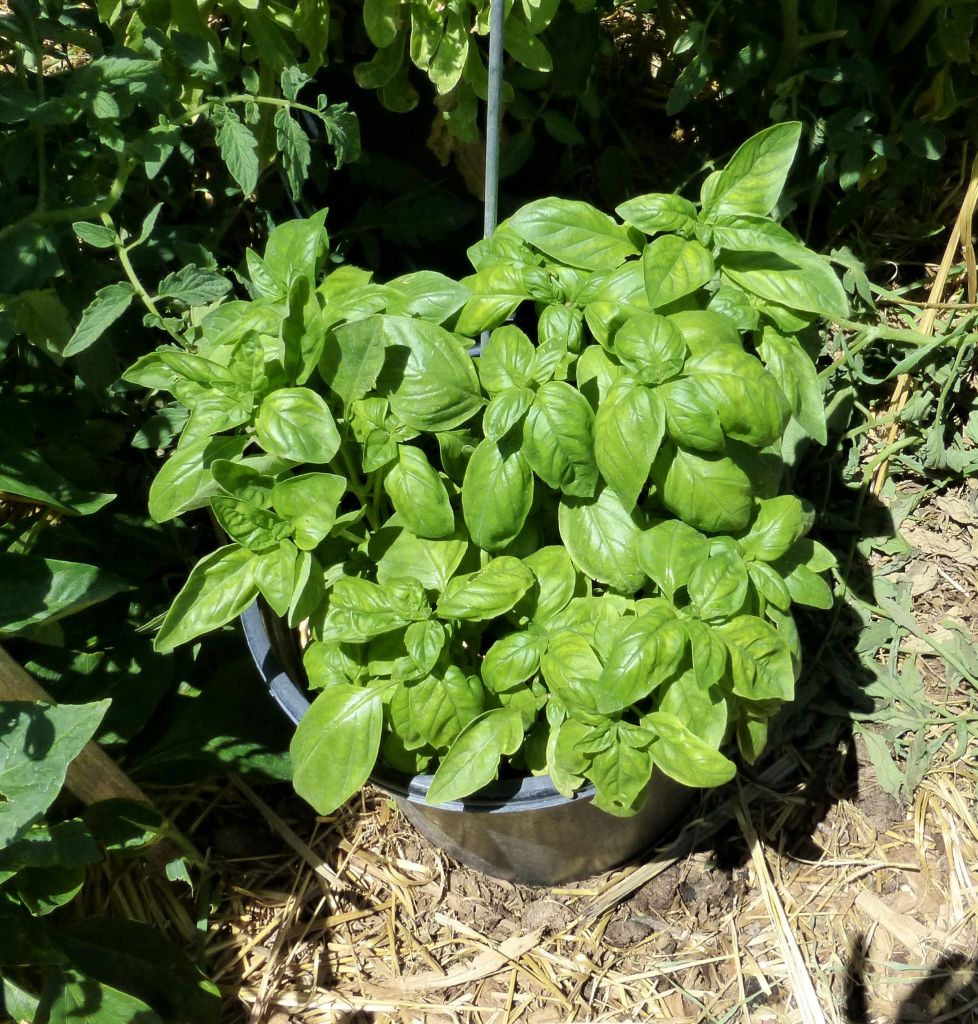
Look at that beautiful basil!

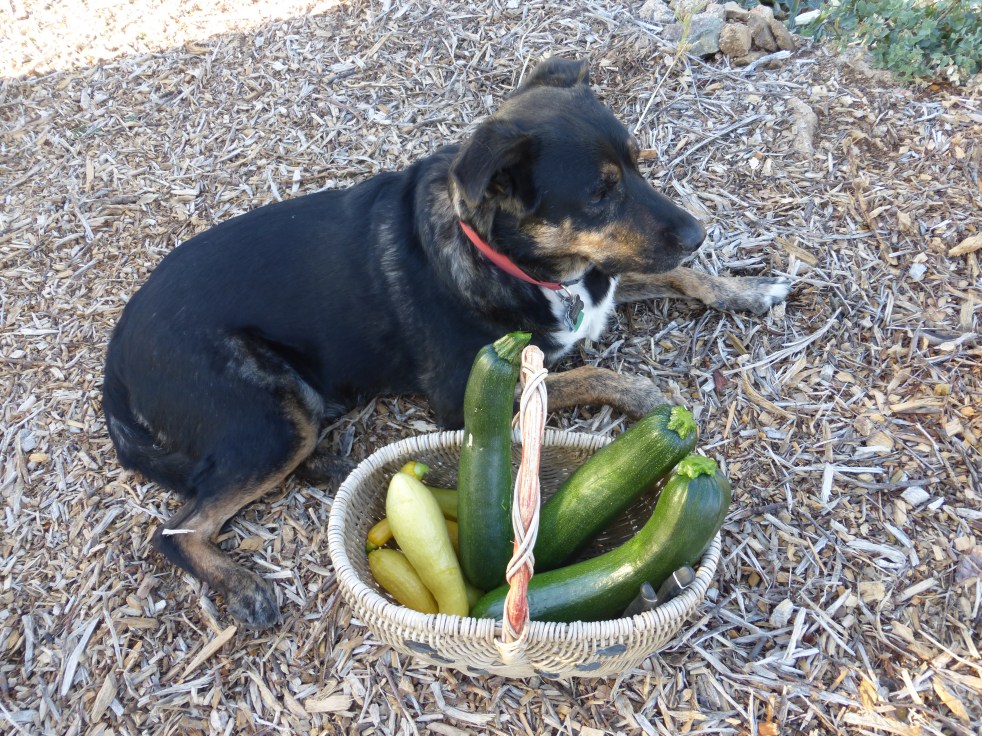
I’ve been harvesting zucchini (Black Beauty and Grey Zucchini) just about daily. I’ve made several pans of stuffed zucchini, Zucchini chocolate cake, roast zucchini, and more. I’ve had enough to blanch and freeze, as well as shred and freeze, so I’ll have zucchini ready for recipes in the middle of winter. Same goes for the yellow squash.
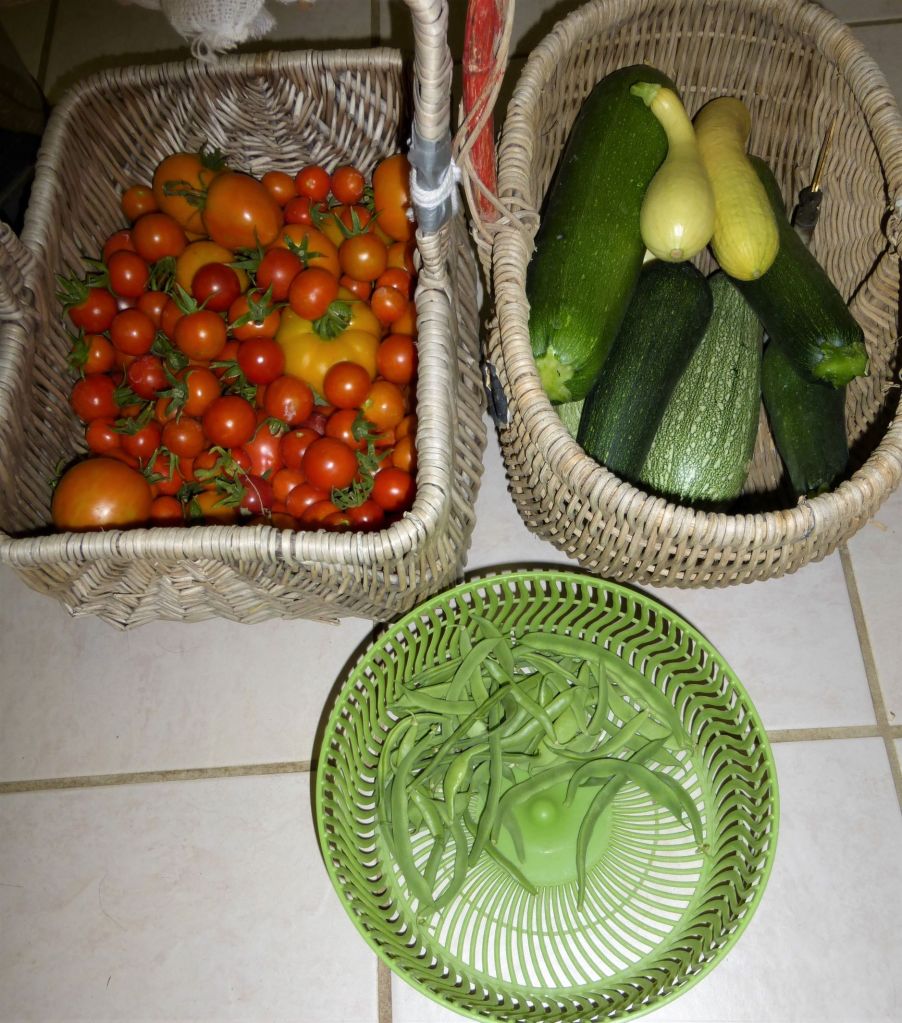
So thankful for the bounty of the garden!

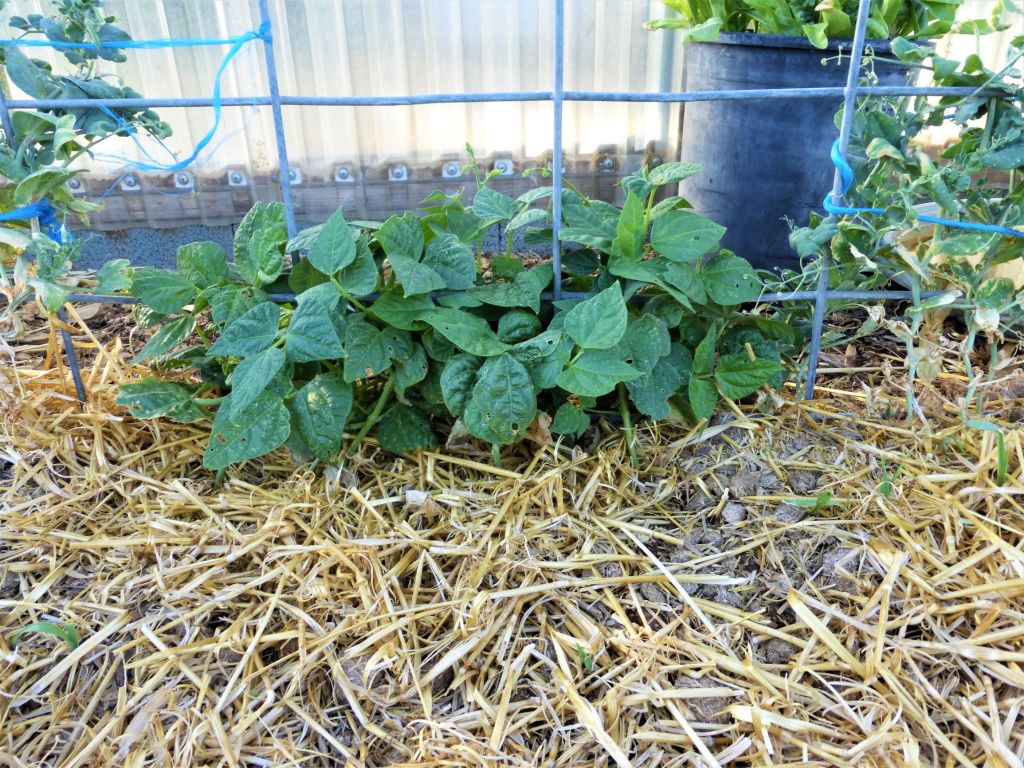
The green beans got off to a good start and I managed to get some good harvests during the early part of the month. I blanched and froze about 3 quarts and have made several meals with fresh beans. I like to saute some garlic in olive oil, add in the beans and cook just until tender- simple and delicious!
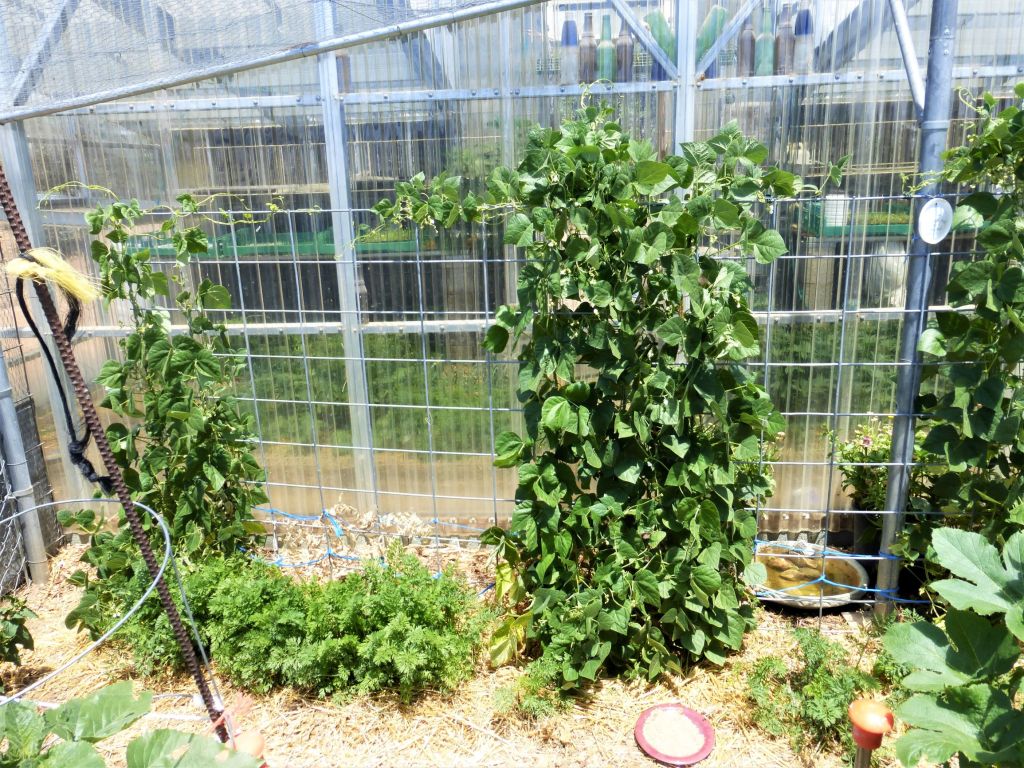
Beans and carrots (with a dish of NOLO bait for the grasshoppers)

The beans got off to a good start, but they’re starting to dry up now. Between the intense heat and the grasshoppers it’s not surprising that the first planting is starting to struggle. I do have beans planted in a few other spots that I started later, so hopefully they’ll start producing soon. I try to make successive plantings with all the veggies that will grow quickly, like beans, summer squash, basil, and greens.
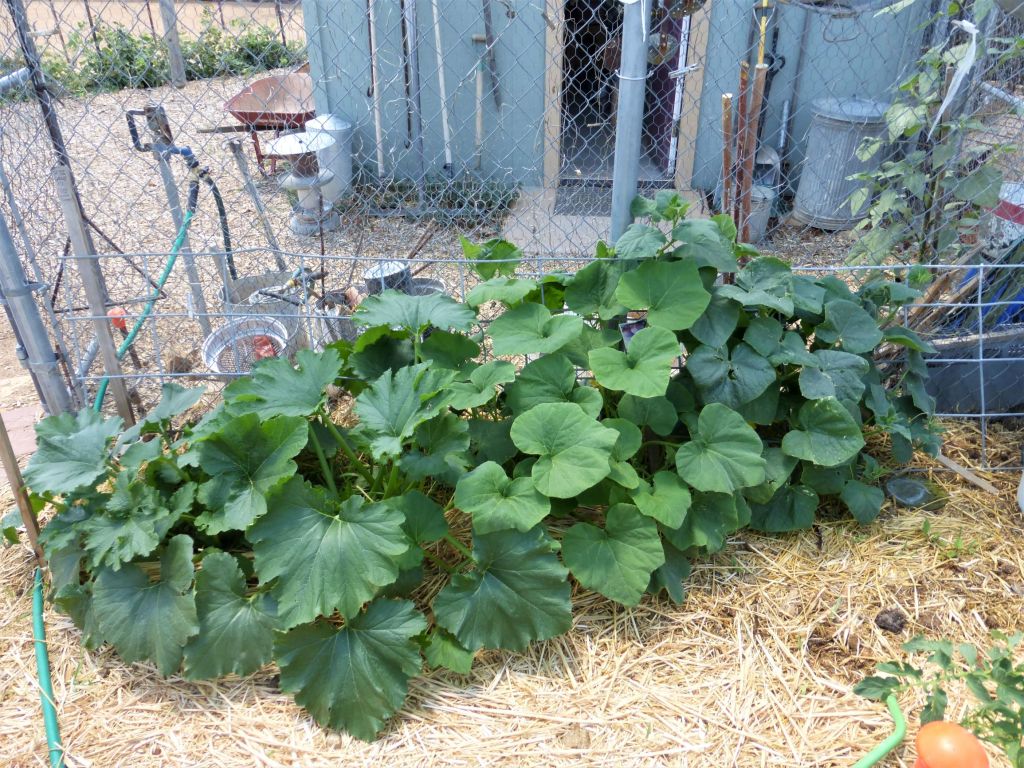
Second planting of zucchini and cucumbers on the end

My second planting of zucchini took off quick and is starting to produce. In the picture above the cucumber plants (on the right) look really good. I managed to get about 4 cukes off the plants before they just up and died:( I’ve had a really hard time with cucumbers (but I keep trying!).
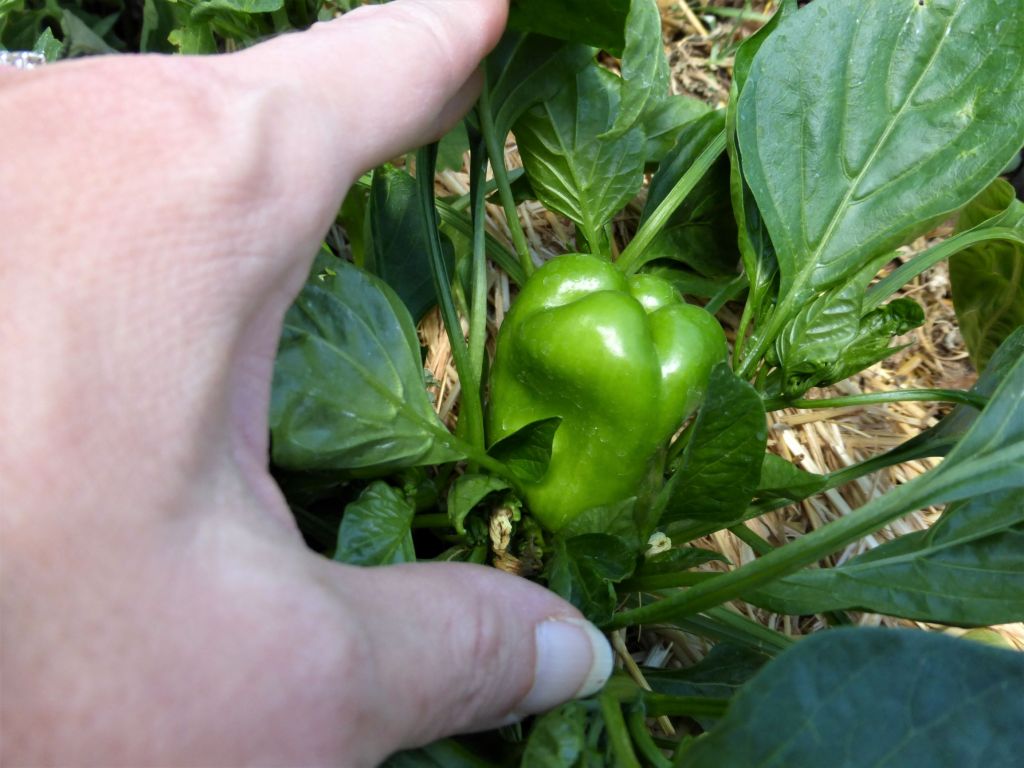
Bell peppers are coming along nicely

After a rough start this spring the peppers have started to really take off and I’ve got quite a few green peppers on the plants. I’ve never harvested red, orange, or yellow peppers before mid to late August, so I’m just trying to be patient and waiting for them to get ripe.
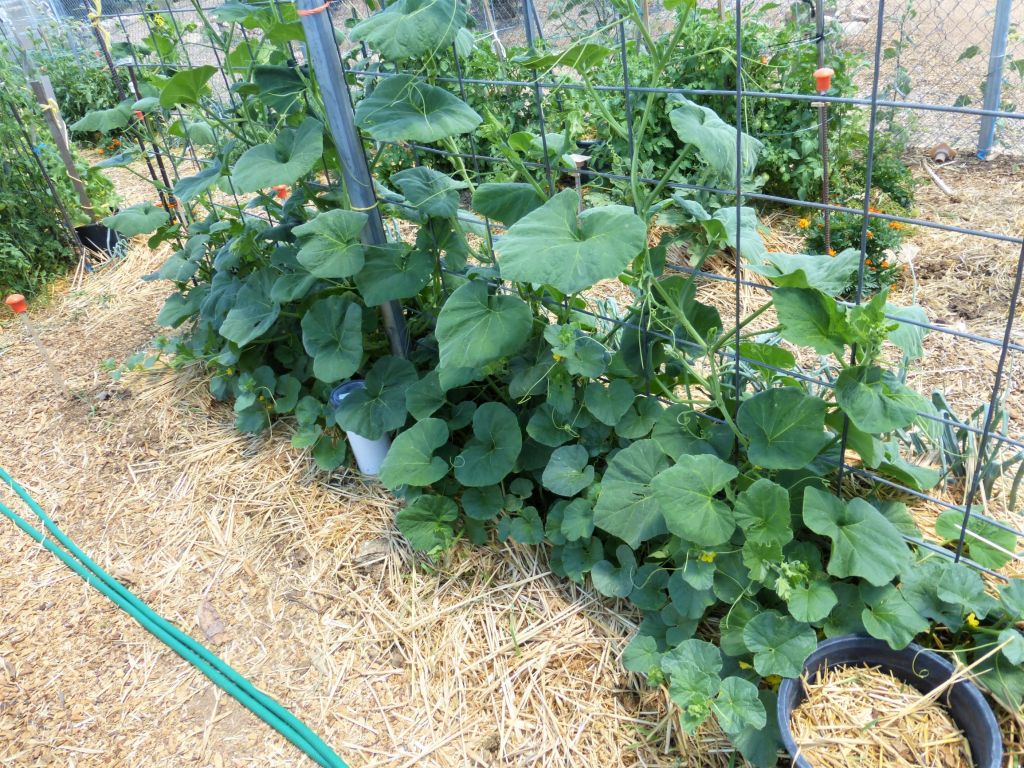
Cantaloupe are full of flowers!

The cantaloupe took a while to come up, and I’d almost given up on them, but they’ve really taken off lately. They’re loaded with flowers and I’m really hoping for a good harvest. Fresh cantaloupe is absolutely delicious!
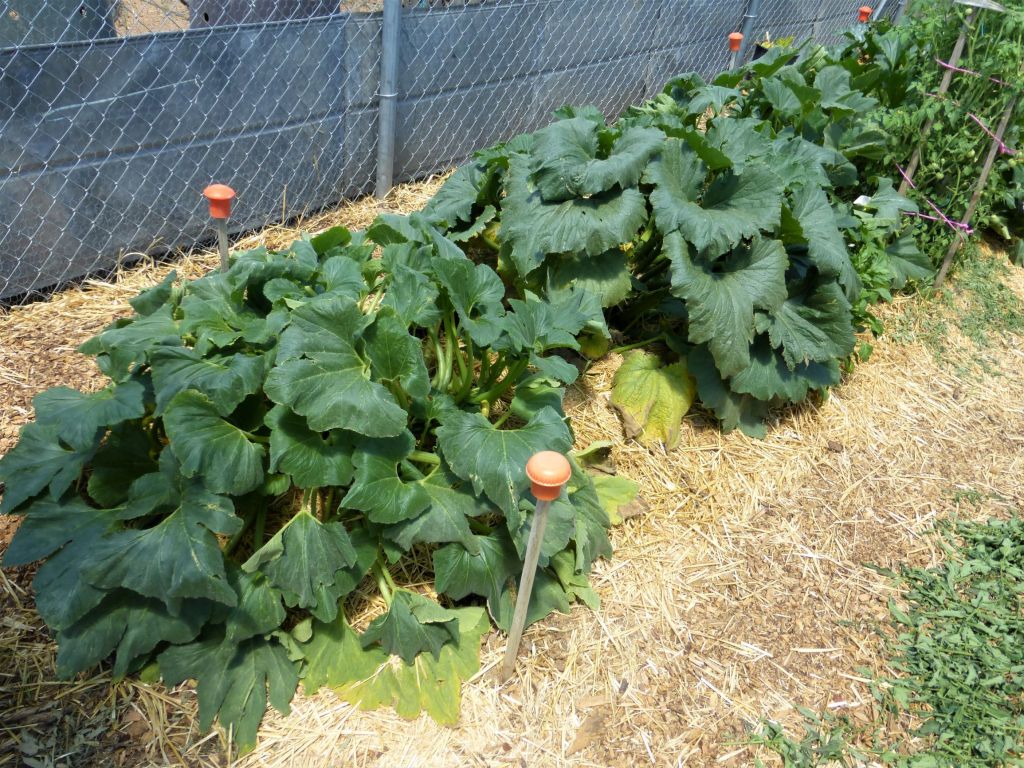
Zucchini and yellow squash plants have gotten huge!

The first planting of zucchini and yellow squash have been producing like mad and I’ve only lost one plant so far. Amazingly I’ve had minimal squash bugs- a first for this garden. In years past those bugs have absolutely decimated my squash plants.
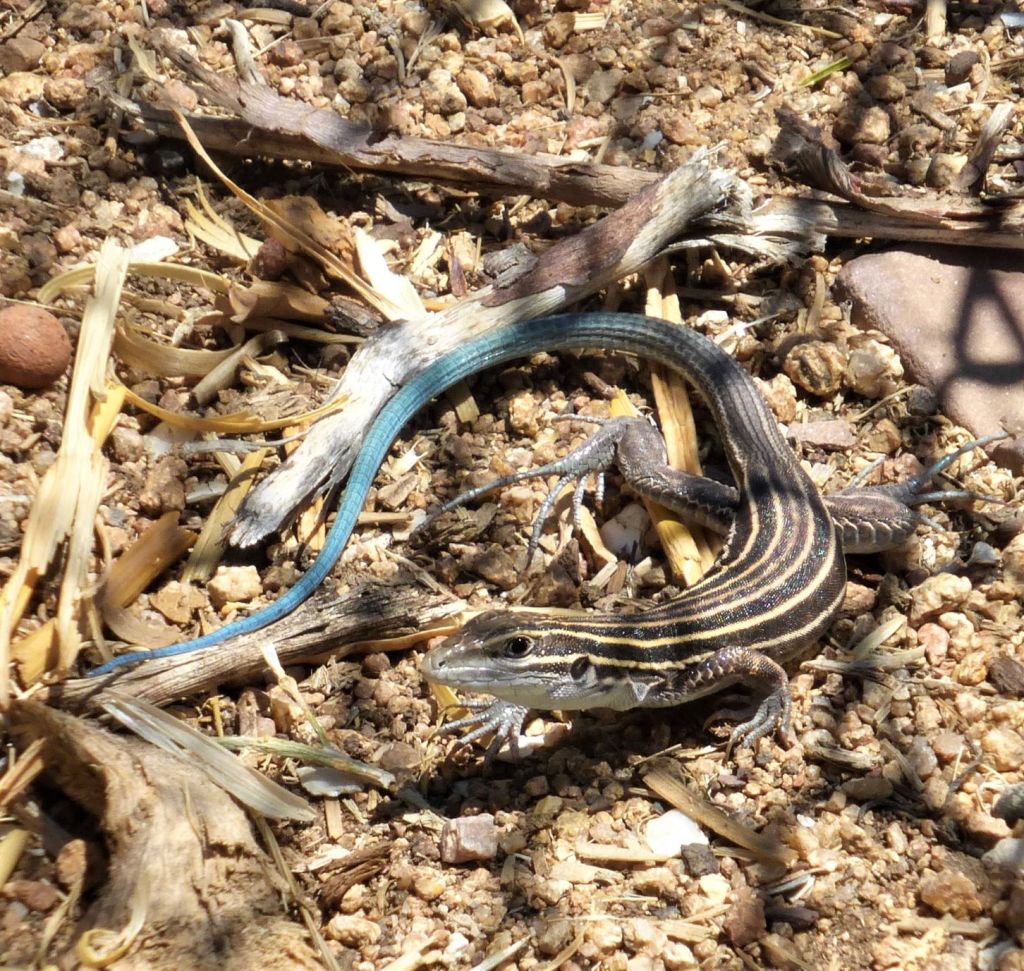
Desert Grassland Whiptail

This year I’ve got LOTS of lizards and beneficial insects in the garden though, and I really think they’re working overtime to keep the bad bugs at bay. I’ve only used Neem a few times when I spotted squash bug nymphs emerging, and then only as a spot treatment. Neem is organic and way safer than chemical pesticides, but it will still kill the good bugs along with the target insects, so I’m trying to play it safe and keep a healthy balance.
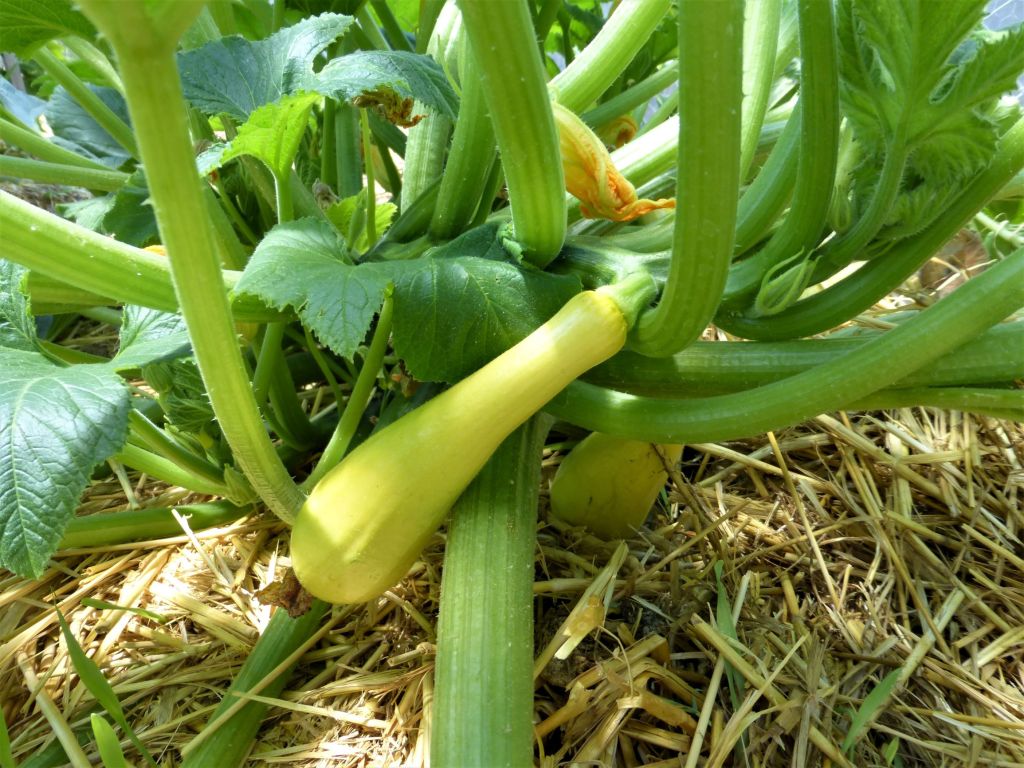
pretty little yellow squash 🙂

For the grasshoppers, which can utterly devastate the garden in no time, I put out NOLO bait, which is a targeted biological insecticide. It only affects grasshoppers and crickets, so it’s safe for the other animals and insects in the garden. I also hand pick and feed the grasshoppers to the chickens every chance I get.
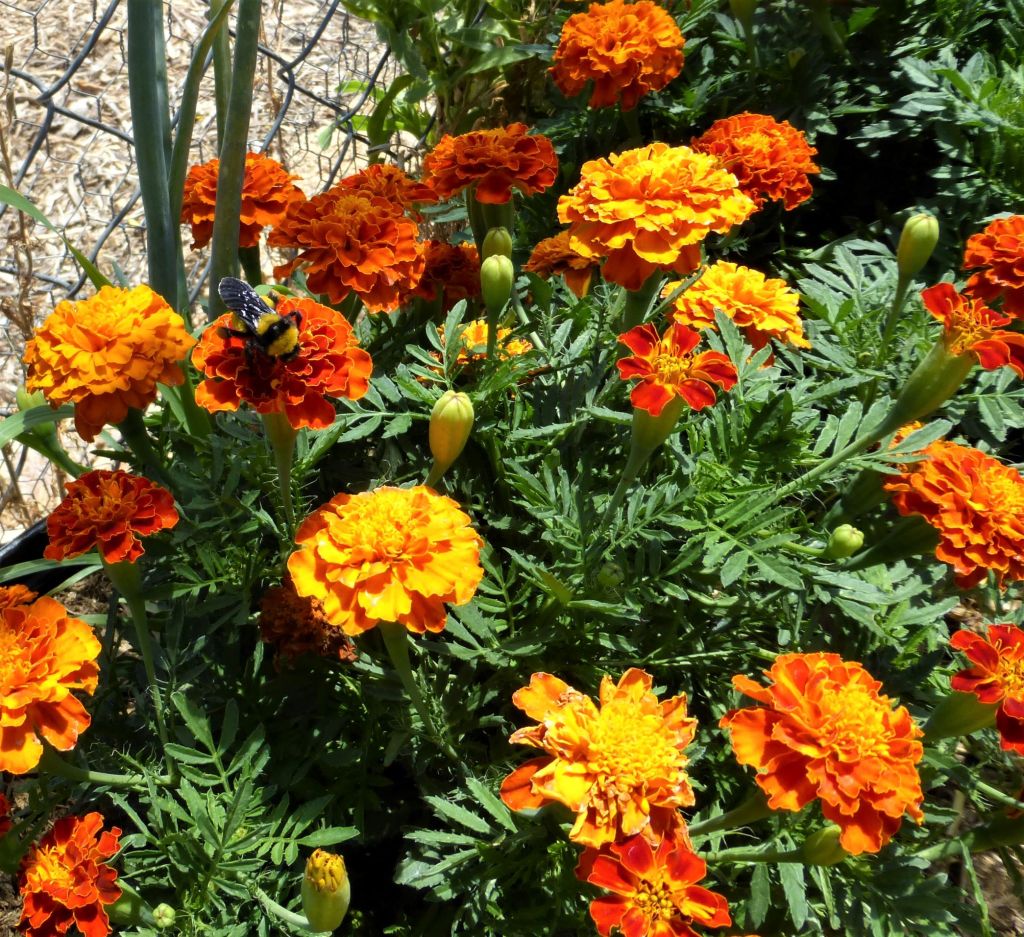
Marigolds for the bees and beneficial insects

One way I attract a host of beneficial insects into the garden is to have a variety of flowers throughout the vegetables. I have marigolds, sunflowers, nasturtiums, calendula, zinnias, and four o’ clocks, along with a few carrots and parsley plants that are flowering. I’ve never seen so many bees, wasps, parasitic flies, praying mantis, ladybugs, dragonflies, and more!
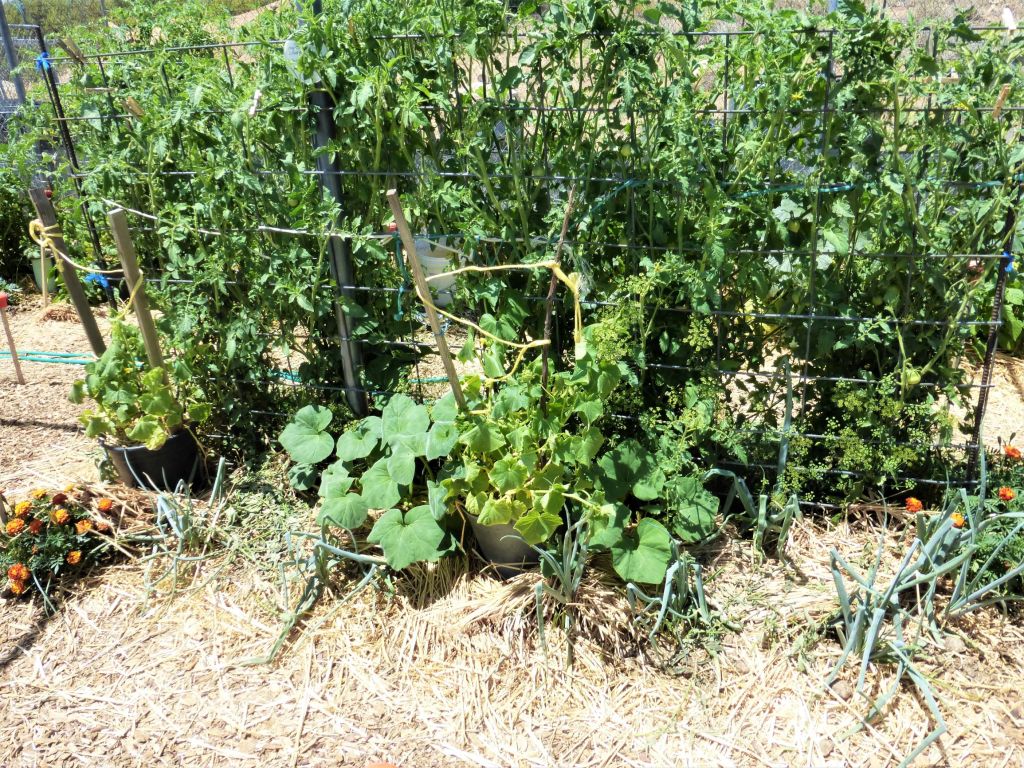
potted cucumbers and butternut squash

The cucumbers I planted in pots are doing pretty good and I’ve even got a few small cukes on the vines. At this point I’d be happy with anything I can get from them!
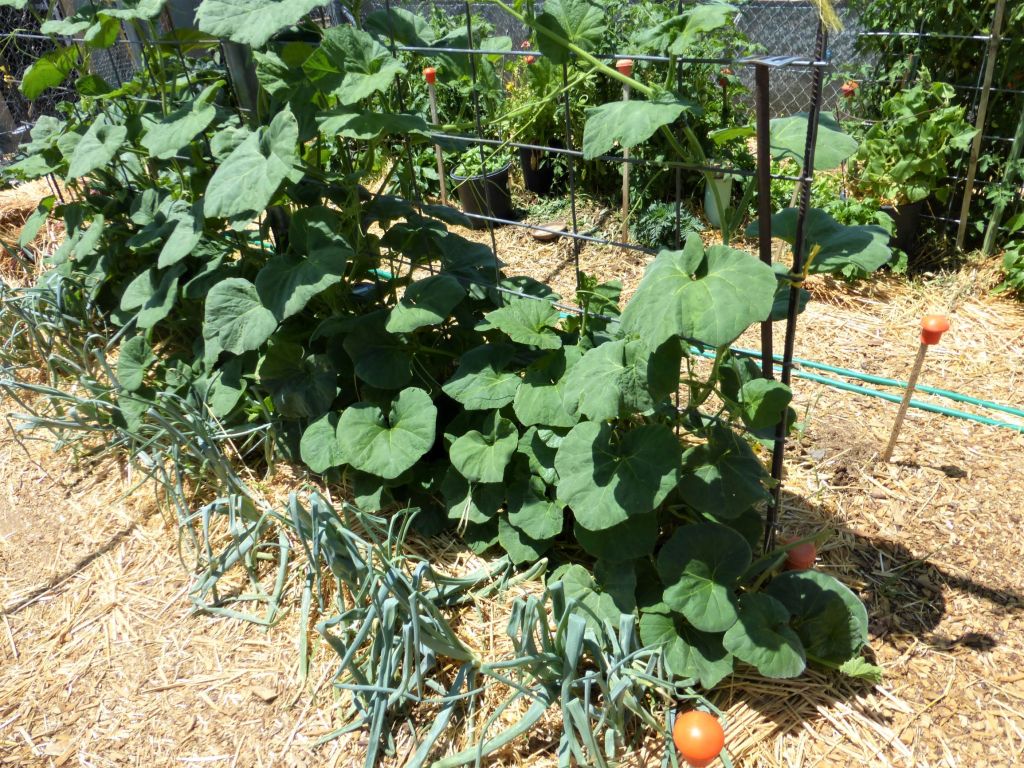
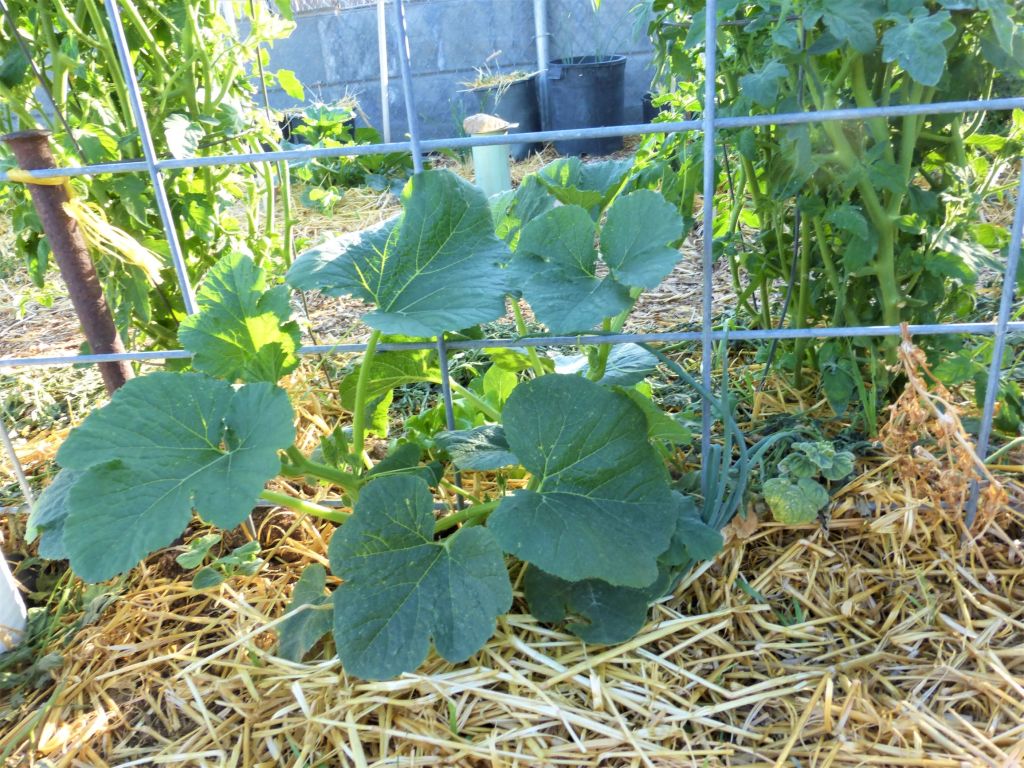
butternut squash and onions

The butternut squash are all doing good and have lots of squash on the vines. If they all reach maturity I’m going to have a lot of butternut squash this fall! I accidentally overplanted this spring, thinking the first batch of seeds wasn’t going to sprout. Turns out they all sprouted- they just took longer than usual. In the meantime I had started more seeds though, and they all came up as well. Then those mystery plants in the compost turned out to be butternut squash too. Good thing we like butternut squash!

So that’s what’s growing in the garden right now. Hopefully everything continues to do well as summer progresses.

Thanks for stopping by!

~Michelle

Shop CreativeCritters on ArtFire
Shop CreativeCrittersClay on Etsy

Find Michelle of CreativeCritters on Facebook

Garden Journal

Garden Review June 2020

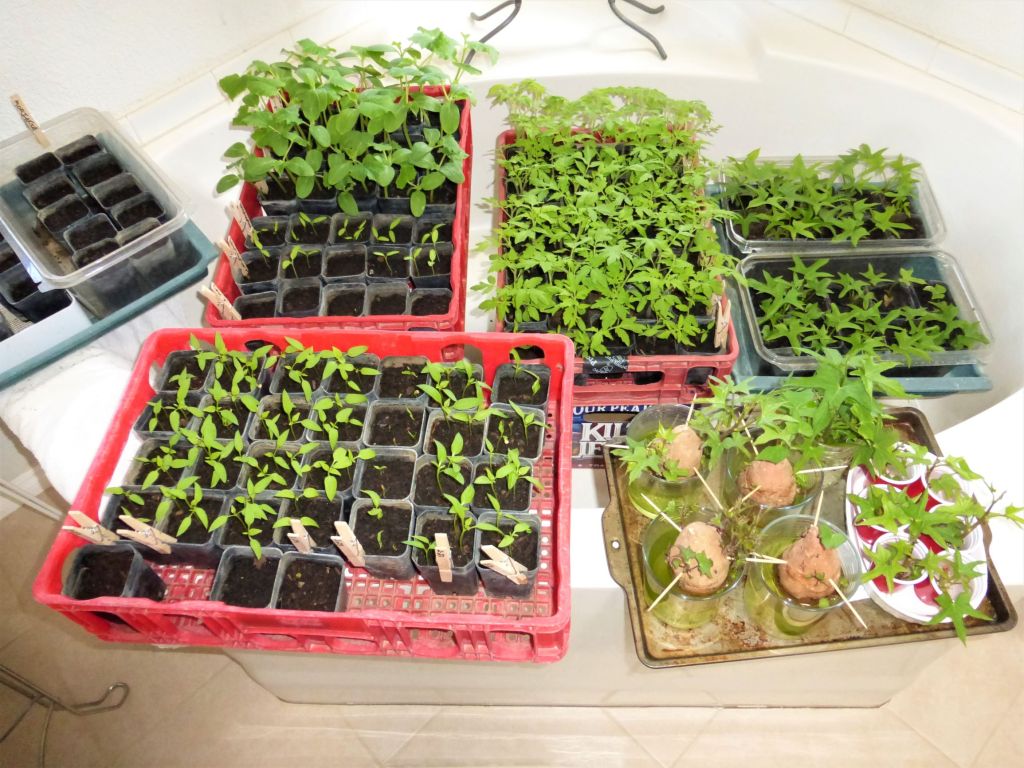
Gardening season is in full swing and things are looking pretty good this year. I started my tomatoes, peppers, eggplants, and sweet potatoes in the house in late February. I kept them in the bathroom, which is nice and cozy warm and has a good level of humidity, so I had excellent germination. Once the seedlings started getting bigger I began taking them out to the greenhouse during the day, then bringing them back inside in the evening when the temps dropped.

Here I’ve got my tomato, pepper, and eggplant seedlings, along with my sweet potato slips

Once the night time temps were around 50 degrees I left the seedlings in the greenhouse full time. If the temps dropped below 50 I covered them with a row cover. I also had them surrounded with glass jugs full of water which absorbed the heat of the sun during the day and slowly released it at night (sort of a greenhouse within the green house 😉 ).

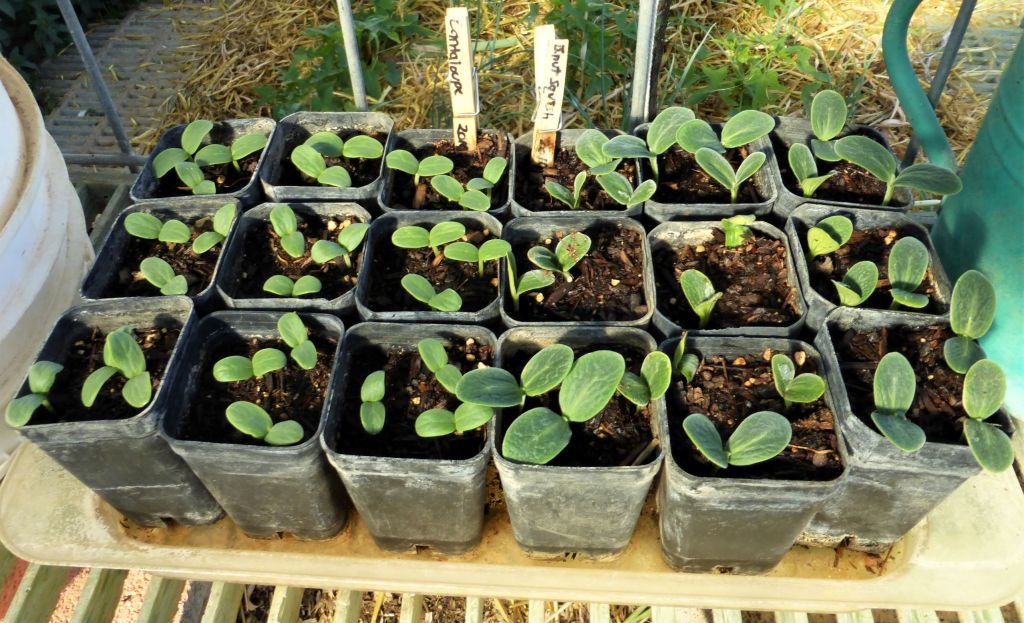
These are my butternut squash and cantaloupe seedlings, planted later than the others because they grow so quickly.

By March the garden beds were all set up and ready for planting. For the first year I’m trying no till gardening in the big garden. I put down a thick layer of compost over each of the beds and planted right in that, then mulched heavily with straw. I’ve certainly got tons of worms, and the soil is rich and loose- no need to even use a trowel or shovel- I just used my hands to gently move the soil enough to make a space for the plants.

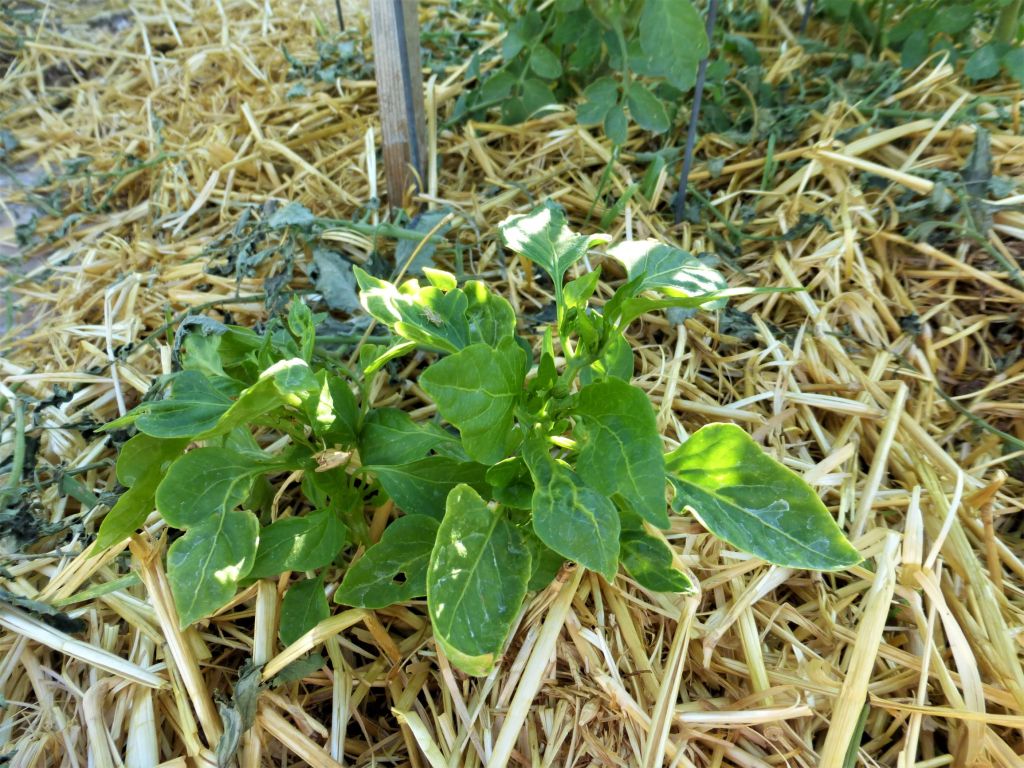
One of my mini Bell peppers

The tomatoes did really well and I think I only lost one or two after transplanting. There always seems to be at least a few casualties. The peppers really struggled at first though. I think the soil was colder than I realized, and peppers need warm soil to thrive. Eventually they perked up though, and those that survived are doing well now and even flowering. I planted some Banana peppers in pots and they’re doing really well, in part because the soil in the pots is considerably warmer than the soil in the beds. I’ve also been fertilizing with Epsom salt every two weeks- that really perks up the veggies!

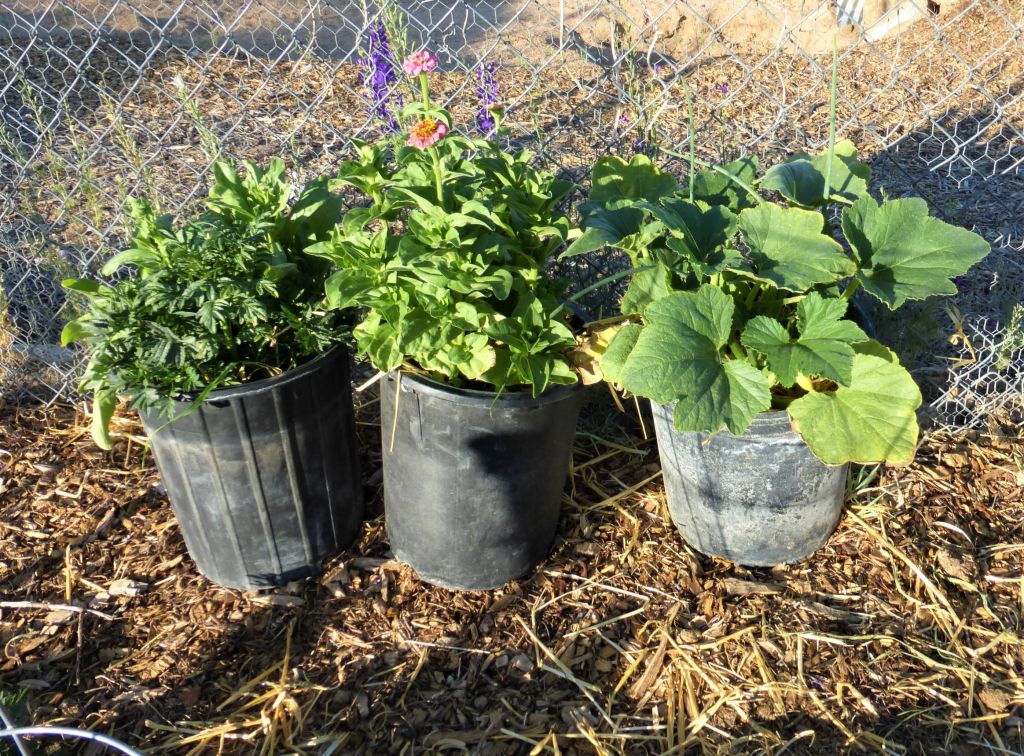
Pots with marigolods, Calendula, zinnias, and yellow squash.

I planted a lot more things in pots this year, and overall that’s working out really well. The zucchini and yellow squash that I planted in pots sprouted and grew faster than those that I planted in the ground (once again, probably due to warmer soil). I planted lots of flowers in pots and as they start flowering I’ve been putting them in various areas of the yard where I’ve had difficulty getting seeds to survive in the ground.

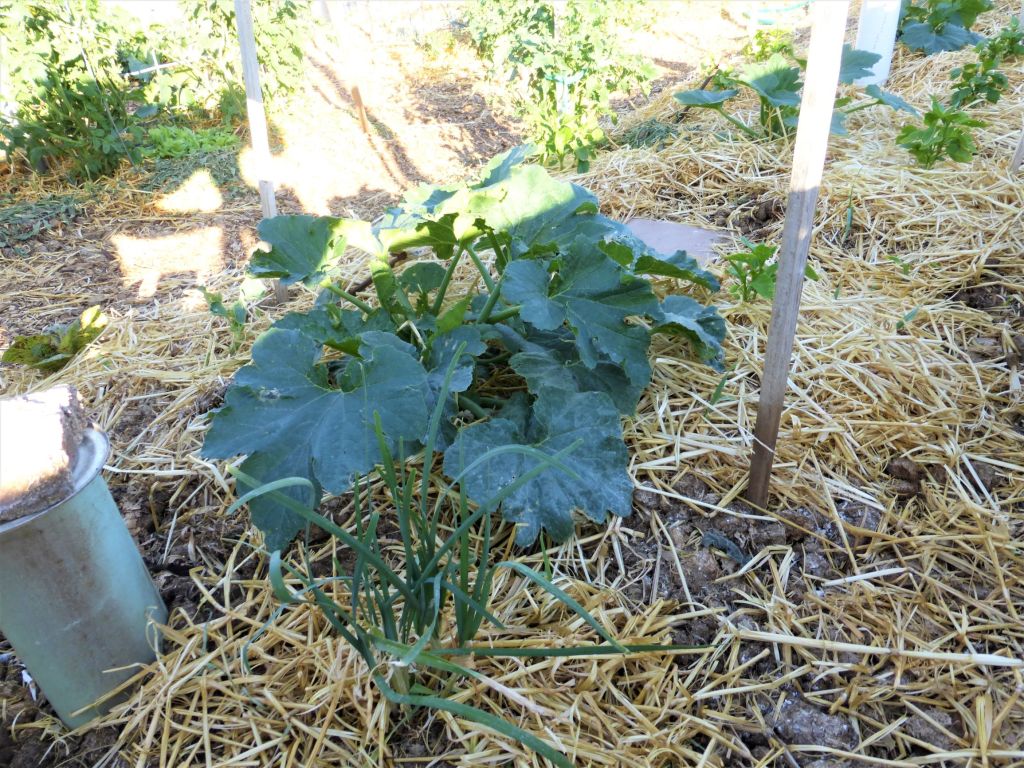
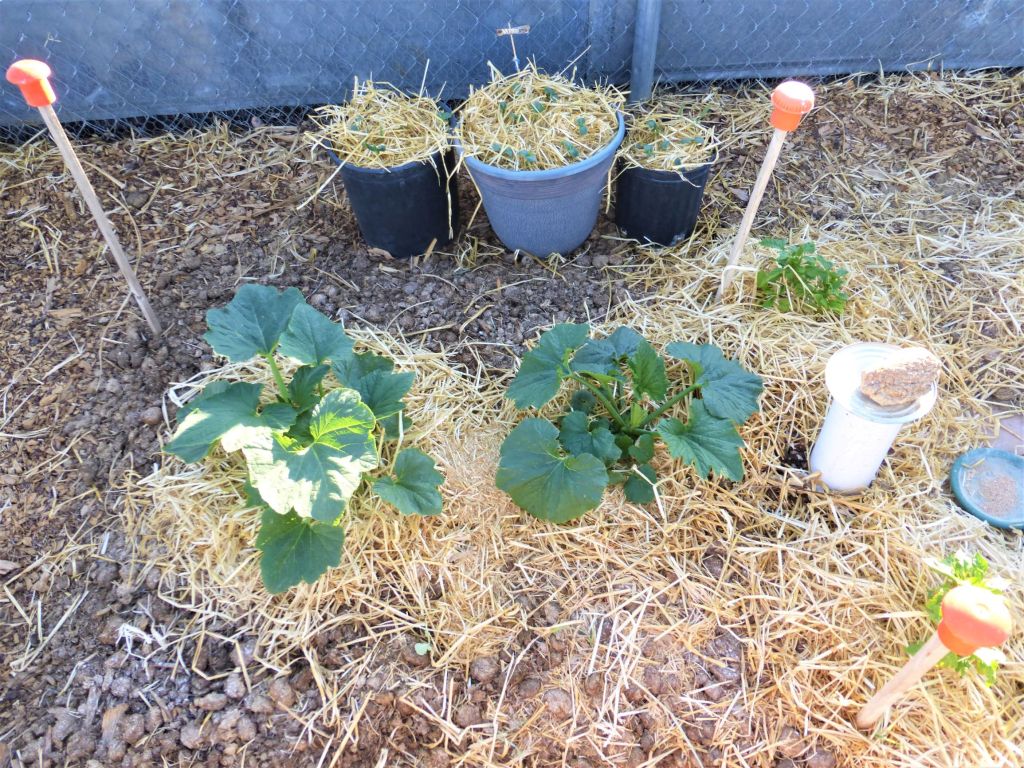
Zucchini’s doing well!

Above you can see that the zucchini (with chives in front) is doing well. All the zucchini and yellow squash have fruit now (I’ll probably be able to pick my first yellow squash tomorrow!). I’ve been fertilizing with Chicken Poop Soup once a month and Epsom salt every 2 weeks and the plants have been thriving.

“Recipe” for Chicken Poop Soup: 1) Rake out the chicken yard and put the chicken manure in a 5 gallon bucket. 2) Fill bucket with water and stir well. 3) Cover and let sit and ferment for a month, stirring occasionally. 4) Strain the solids, dilute well (I dilute one 5 gallon bucket of pure soup to make 4 buckets of diluted fertilizer). Water plants with the diluted soup, trying to avoid getting it on the leaves. I spray the plants with the hose to make sure none of the leaves get burned. So far I haven’t had any issues.

One warning: this stuff STINKS! But the plants love it 😉

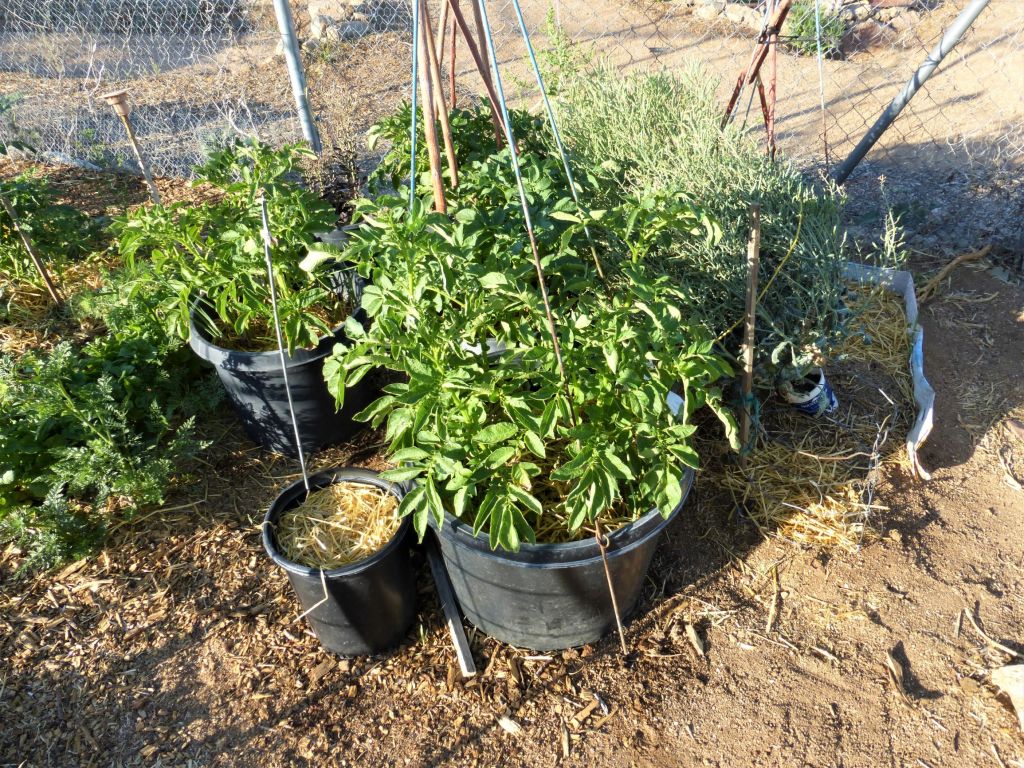
Potatoes in pots

This year I planted all my potatoes (Yukon Gold and Gold Rush) in big pots filled with compost. They sprouted faster than ever before and are absolutely thriving! I can probably start harvesting potatoes any time now. I also had a bunch of potatoes from last year come up in the raised bed along with the sweet potatoes I planted.

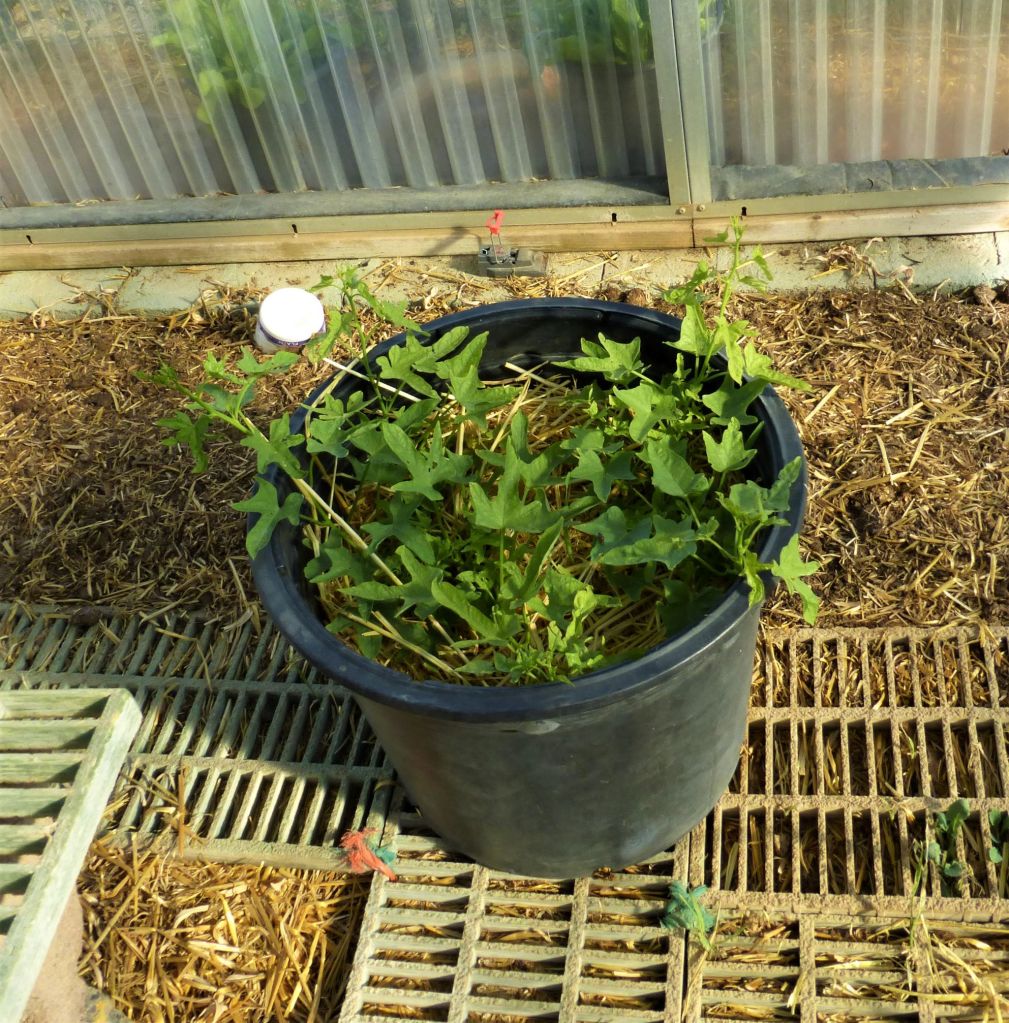
Sweet potatoes in pot in greenhouse

I ended up with a ton of sweet potatoes this year (I lost count after 40 slips 😉 ), so I’ve got them planted all over. Some are in pots in the greenhouse, which are doing really well, some are in raised beds outside, and some are in the ground in the greenhouse. The ones in the greenhouse are doing the best. They’re another heat loving plant, so they’re perfectly comfortable at 100 degrees or more, just as long as they have enough moisture and mulch. This year I’ve really been going heavy on the mulch, and even when the outside temps have approached 100 there was minimal wilting and signs of heat stress, and the soil was still nice and cool.

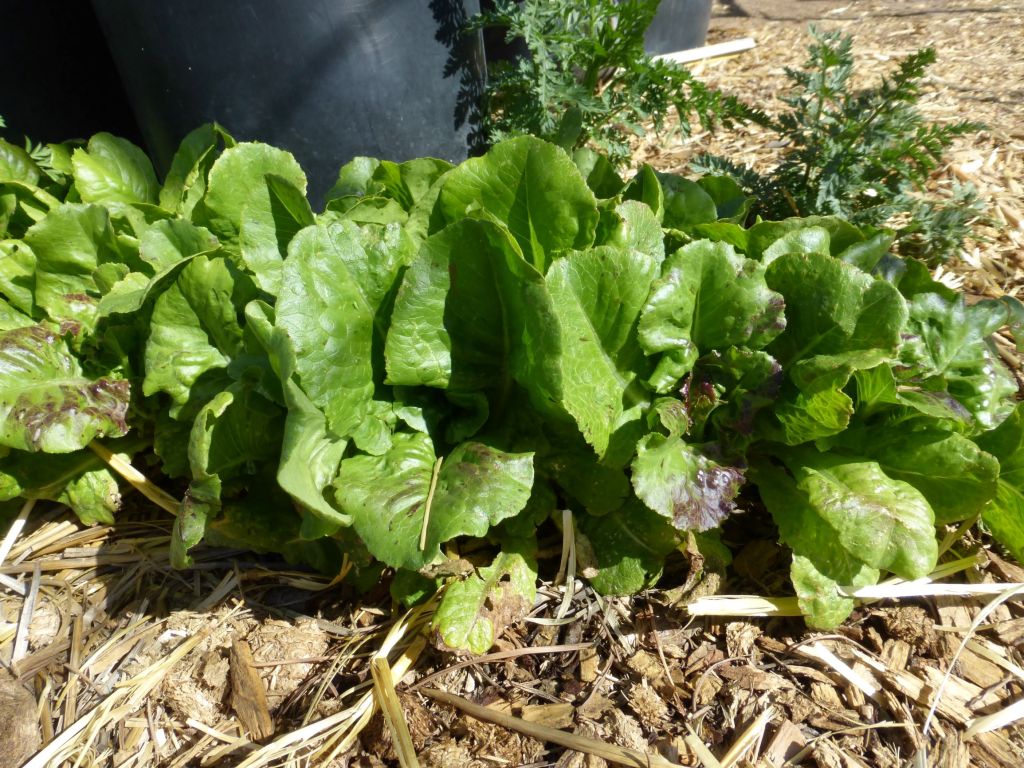
My amazing super awesome Trout Speckled Buttercrunch cross lettuce

Now this lettuce above is the most awesome lettuce I’ve grown yet. I planted the seeds in late September last year, then forgot about them when nothing came up for a month. These were from seeds I’d saved the previous year. Then in JANUARY I noticed a few tiny lettuce sprouts, and thought “Oh cool, I might get a few plants out of this after all”. So I covered the area with a row cover and forgot about it again. I didn’t have much hope for a very good harvest, as temps were dropping down to the teens at night. When I finally took the row cover off in late February I saw a whole row of beautiful Trout Speckled Buttercrunch lettuce (my Trout Speckled Romaine crossed with my Buttercrunch)! These plants have survived temps down to 14 degrees, and up to 97 degrees!! Not to mention winds up to 30 miles an hour for DAYS STRAIGHT! And although they were tough enough to survive those extremes (not to mention rather infrequent watering and a bit of unintentional neglect) the leave are thick and soft and succulent. You better believe I’m saving seeds from these beauties! They just started going to seed last week, so clearly they’re very slow to bolt, which is a definite plus in this hot climate.

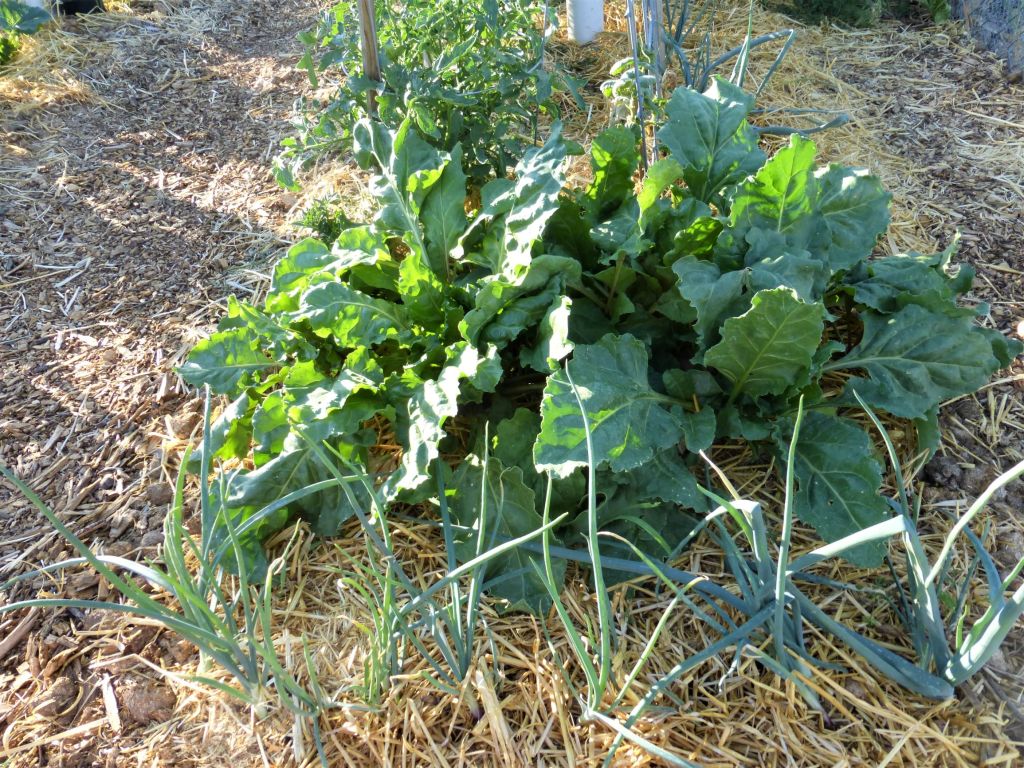
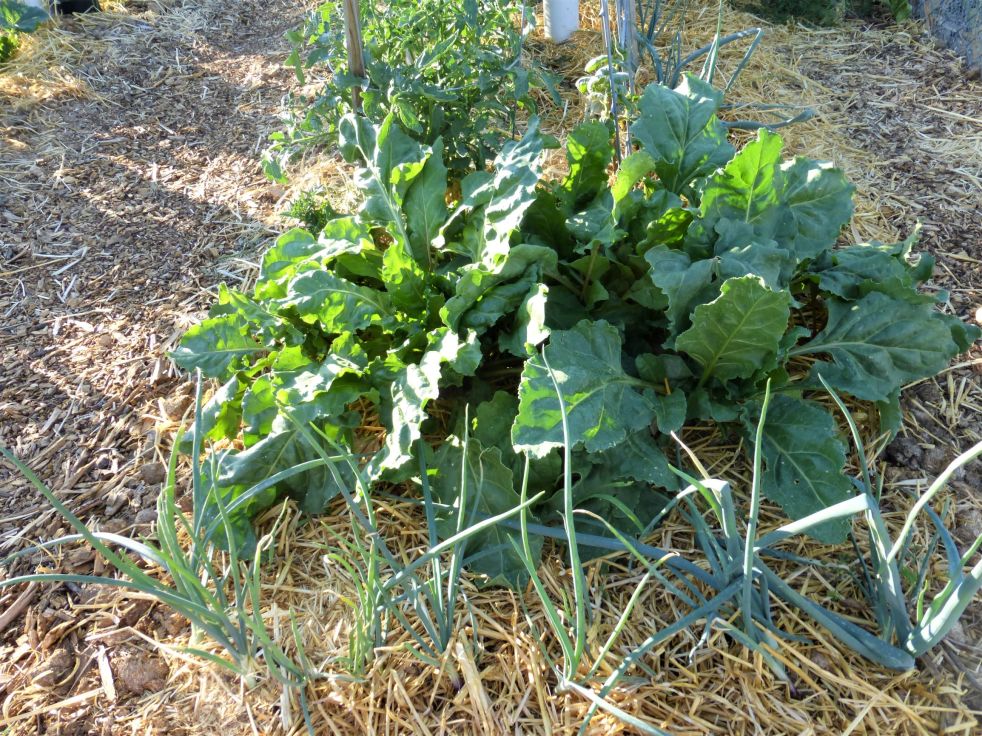
beets and onions

This year I’v e done a lot of random planting and companion planting. There are a few benefits to this method versus planting large areas with a single type of vegetable. The plants seem to do better in small groupings, and if one area gets hit by bugs or disease, at least I won’t lose ALL of my zucchini, or tomatoes, or whatever else I’ve got. Interplanting also helps to confuse the bugs. It makes it harder for them to find their target food plant. This is also where companion planting can really help. Marigolds and nasturtiums are good companions for most vegetables, as are onions and garlic. They help to repel the bad bugs and encourage the good bugs.

The spaghetti squash looks great!

One thing I’ve had a hard time growing successfully is cucumbers. I started them in pots in the house, then moved them out to the greenhouse when the weather got warm enough and they did really well until I transplanted then into the garden. Most of them have died now 😦 In the picture above you can see a really healthy spaghetti squash and a tiny sad little cucumber plant next to it. I tried planting the cukes in several different places and only 4 or 5 look like they might make it.

Cucumbers in pots and zucchini and yellow squash

I did start a second batch of cucumbers in pots, and so far they look pretty good. Hopefully I’ll be able to get something out of them!

pole beans are off to a good start

Some of my beans are doing really well, while others were eaten before they even sprouted through the soil. Between the bugs and the critters it’s a real battle to keep things alive. I had to start more butternut squash seeds because the first batch was eaten by bugs just as it sprouted. Mice have been pretty destructive too, so I’ve been putting traps out wherever I spot damage. I use Neem, Diatomaceous Earth, and hand picking to control the bugs, as well as encouraging beneficial insects and animals to live and hunt in my garden. I have LOTS of lizards in the garden, along with toads, and ladybugs, lacewings, and wasps. The flowers help to attract the beneficial bugs and the mulch also gives them a place to live. Oh yeah, I’ve got lots of ground spiders this year too. I also have a birdbath on the ground so the lizards, toads, and bugs have a supply of fresh water.

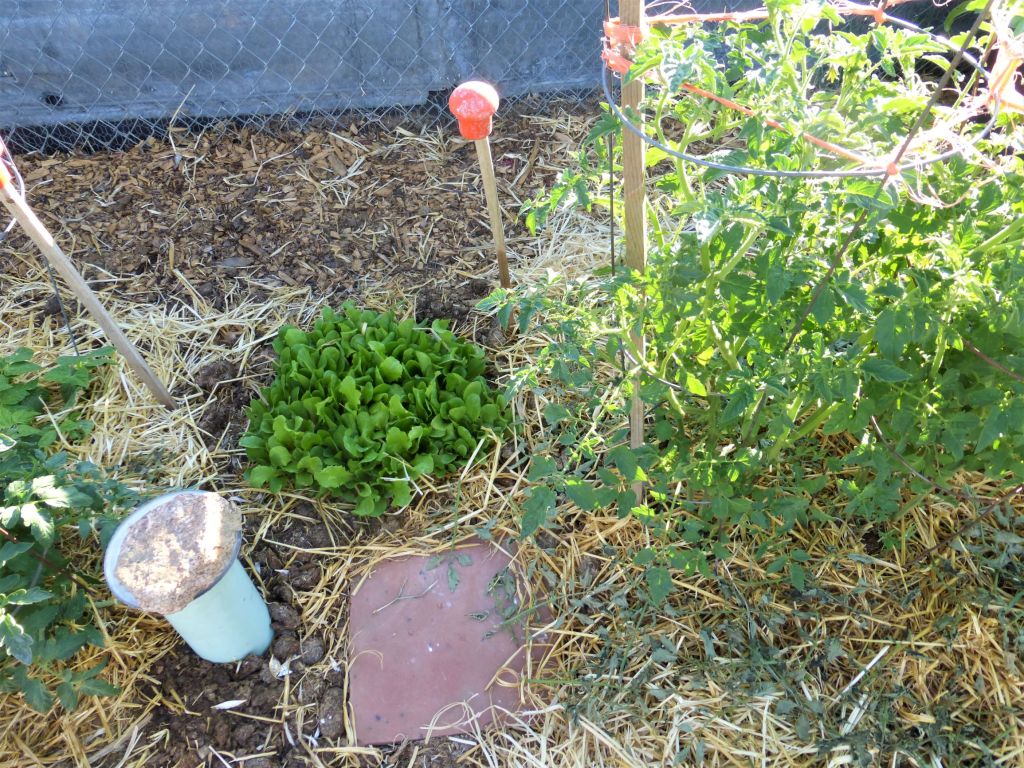
lettuce planted in the shade of a tomato

Above is another example of my random planting this year. I found small shaded spots under or behind the tomatoes and planted little patches of lettuce and greens. Surprisingly I’ve still been able to harvest lettuce even though the temps have been well into the 90’s every day.

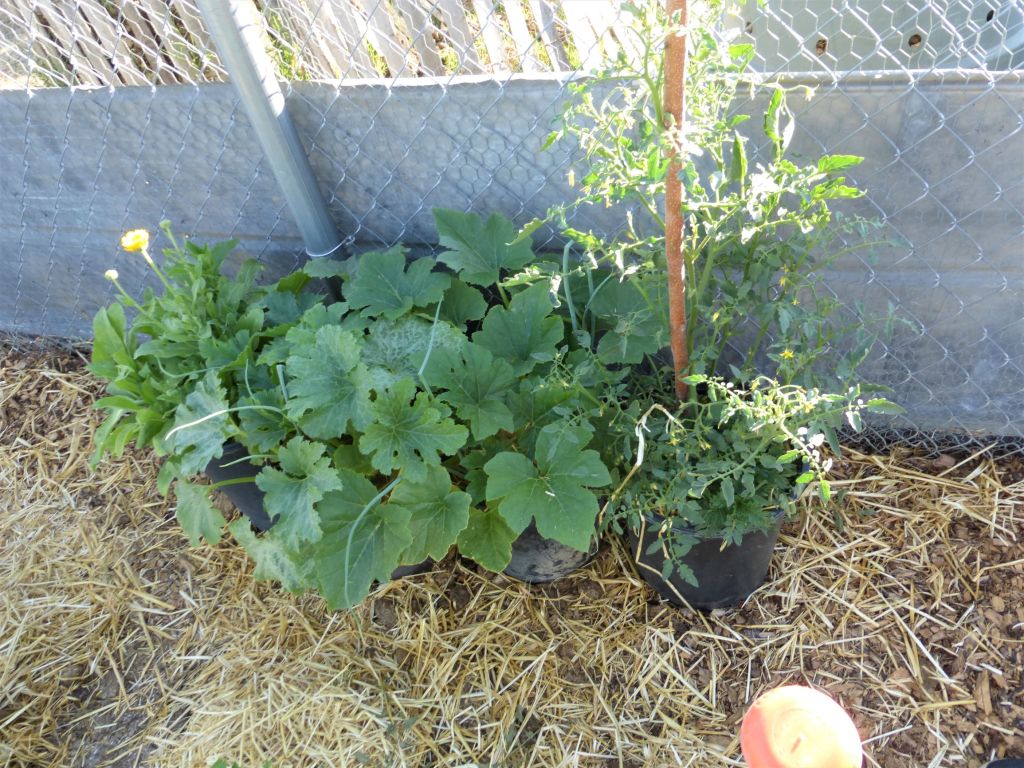
My stray “compost tomato” , zucchini, yellow squash, and calendula in pots.

Last fall I filled a bunch of pots with compost to put in the greenhouse and add some heat (they get really toasty in the sun!). I got a nice surprise early this spring when the tomato plant above spouted (don’t know what kind of tomato it is yet, but it’s doing really well and got flowers before any of the other plants). I love my “strays”- those plants that pop up on their own and seem to be stronger, more resilient, and more productive than the seeds that I planted intentionally. I’ve got a couple stray lettuce plants that have been providing leaves for the salad for months now. I’ve got a few stray tomato plants that popped up in the garden as well.

All in all things are doing really well, in spite of the intense heat and wind, not to mention the bugs and varmints (you wouldn’t believe how much the rabbits, mice, rats, and squirrels can devour!). It may sound silly, but I’m proud of my garden ❤ It takes a strong, resilient plant to survive and thrive around here, and my plants are putting on one heck of a show!

Thanks for stopping by- hope you enjoyed this little peek into my personal Garden of Eden 🙂

~Michelle

Shop CreativeCritters on ArtFire
Shop CreativeCrittersClay on Etsy

Find Michelle of CreativeCritters on Facebook